-
Now live! Generate even more savings with our Skygate system. Click here to learn more.

On this page
Solar Photovoltaic
11 mins read
Can Warehouses Run On Solar Power?
15 Apr 2026When warehouse solar delivers strong savings and how to maximise on-site generation.
Take the first step toward energy independence today.
get a quote
On this page
Solar is no longer just a sustainability initiative for warehouses. It is increasingly being used as a practical way to reduce operating costs, improve energy predictability, and take control of long-term electricity spend.
Warehouses are particularly well-positioned to benefit. Their large roof areas, consistent daytime operations, and high energy demand create ideal conditions for generating and using solar power on-site.
This article explores whether warehouses can run on solar power in practice, where it delivers the most value, and what factors determine whether it is a strong commercial fit.

12 min read
On this page
- Why Warehouses Are Well Suited For Solar Installations
- When Warehouse Solar Installations Make Sense
- Situations Where Warehouse Solar May Not Be Suitable
- How Solar Systems Operate In Warehouse Environments
- How Upvolt Helps Businesses Evaluate And Install Solar For Warehouses
- Let’s Recap
- About Upvolt
- FAQ
Key Takeaways
- Warehouses are among the most suitable building types for solar due to large roof space, high energy demand, and daytime operations.
- The strongest returns come when solar generation aligns with on-site energy usage, maximising self-consumption.
- Factors such as roof condition, grid capacity, and ownership structure can impact overall viability.
- A well-designed system, tailored to operational needs, is essential to ensure solar delivers measurable cost savings over time.
Why Warehouses Are Well Suited For Solar Installations
Warehouses are among the most commercially attractive buildings for solar in the UK. Their scale, energy profile, and structural design create ideal conditions for generating and using large amounts of on-site electricity.
For many operators, this turns solar panels from a sustainability initiative into a clear cost-reduction strategy.
Large Roof Space And Structural Advantages
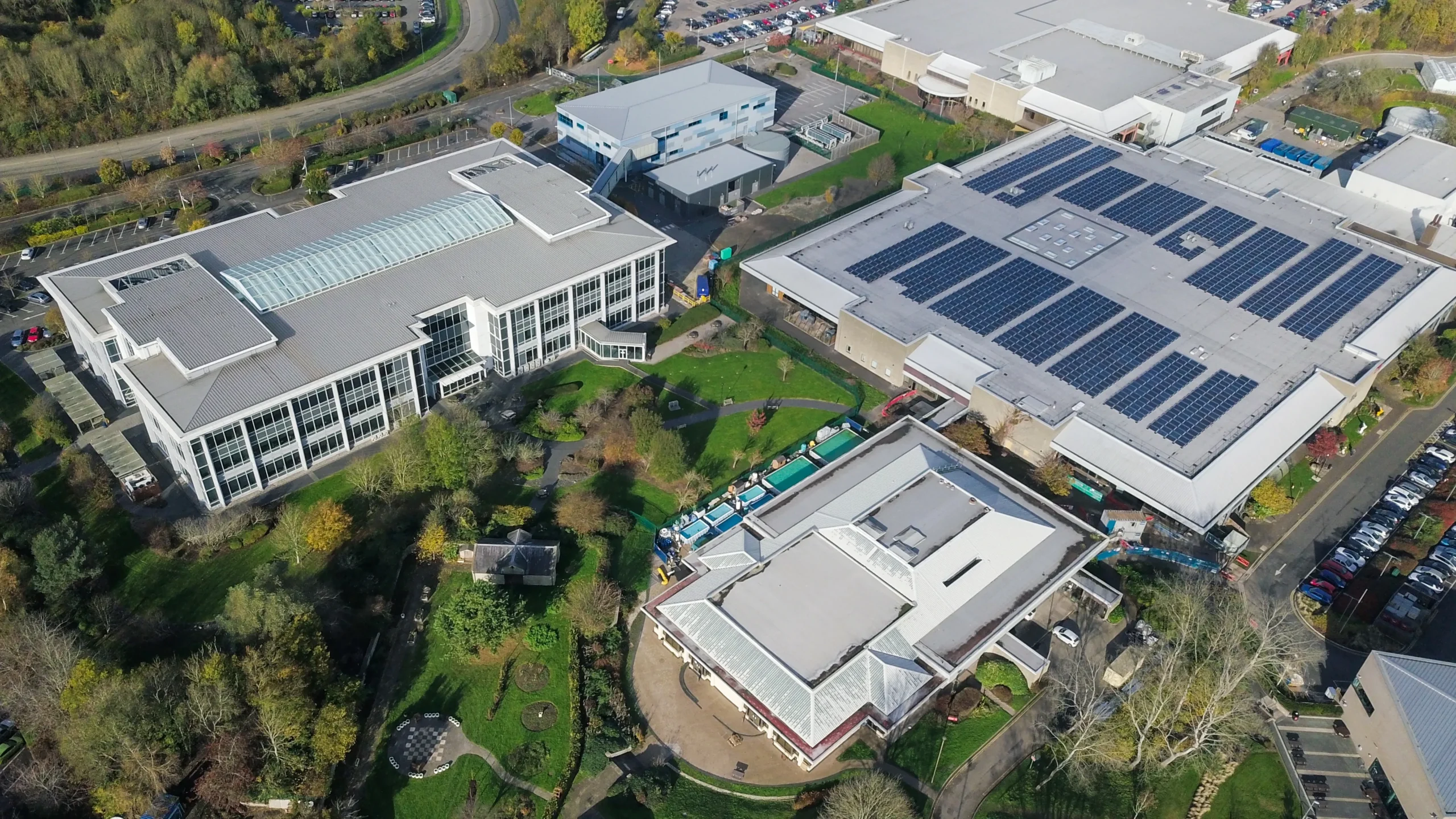
Warehouse roofs offer one of the biggest advantages in commercial solar.
- Expansive, unobstructed roof areas allow for large-scale installations
- Flat or low-pitch designs simplify panel placement and maximise coverage
- Structures are typically built to handle additional load without major reinforcement
The scale of modern warehouse development only strengthens this advantage. The average warehouse size has increased from around 217,000 sq ft in 2015 to approximately 340,000 sq ft in 2020, creating significantly more usable roof space for solar installations.
This combination makes it possible to install high-capacity systems without the complexity or cost seen in other property types. More panels mean more generation, and more generation means greater potential savings.
High Daytime Energy Demand
Warehouses often consume the most energy during the same hours solar systems generate electricity.
- Lighting, automation systems, and equipment run throughout the day
- Operations such as picking, packing, and logistics align with daylight hours
- Energy demand is consistent and predictable
This alignment allows a large proportion of generated electricity to be used immediately on-site, rather than imported from the grid. As a result, solar becomes especially worth it for businesses using warehouses, where high daytime demand translates directly into measurable cost savings and improved energy efficiency.
Opportunity For On-Site Power Generation
Solar allows warehouses to shift from being purely energy consumers to active energy producers.
- Generate electricity directly at the point of use
- Reduce exposure to rising grid prices
- Improve control over long-term energy costs
At scale, this can significantly reduce operating expenses and improve cost predictability across the business.
When Warehouse Solar Installations Make Sense
Warehouses are well-suited to solar, but the strongest results come when the right operational and commercial conditions are in place. Solar delivers the most value when it can be used directly, consistently, and over the long term.
Understanding these factors early helps determine whether solar will deliver meaningful savings or fall short of expectations.
Consistent Operational Hours
Warehouses that operate during daylight hours are in the strongest position to benefit.
- Energy demand aligns with peak solar generation
- More electricity is used on-site rather than bought from the grid
- Immediate cost savings are realised without relying on export
This alignment between production and demand is where solar performs best. It increases self-consumption, shortens payback periods, and improves overall system value.
High Electricity Consumption
The scale of energy use directly impacts the financial return.
- Larger energy demand creates greater cost-saving potential
- High usage increases the value of each unit generated
- Significant reliance on grid electricity can be reduced
Warehouses typically consume large amounts of electricity across lighting, equipment, and environmental controls. This makes them well positioned to turn solar generation into measurable cost reduction.
Owner-Occupied Industrial Properties
Control over the building is a key factor in unlocking long-term value.
- Full ownership allows long-term planning and investment
- All savings remain within the business
- No restrictions from lease agreements or landlord approvals
Owner-occupied facilities benefit from the full lifecycle of the system, making it easier to justify the upfront investment and maximise long-term returns.
The table below summarises how these factors influence solar viability:
| Condition | Why It Matters | Impact on Solar Viability |
| Consistent Daytime Operations | Solar panels produce electricity when your facility uses it most | Higher, immediate energy savings |
| High Electricity Demand | Greater consumption means more grid power to replace | Faster payback and larger energy bills reduction |
| Building Ownership | Full control of investment and long-term agreements | Complete energy independence and security |
| Stable Energy Requirements | Predictable usage allows efficient system sizing | Optimised cost-effective energy generation |
Situations Where Warehouse Solar May Not Be Suitable
While warehouses are often ideal for solar, there are cases where installation may not deliver the expected return. Solar works best when the building, energy usage, and ownership structure all support long-term performance.
Identifying these limitations early helps avoid unnecessary investment and ensures any decision is based on realistic outcomes.
Structural Or Roof Limitations
The roof is the foundation of any warehouse solar installation. If it cannot support the system, performance and viability are immediately affected.
- Older roofs may not meet load-bearing requirements
- Structural deterioration can require repairs before installation
- Reinforcement or upgrades can significantly increase project costs
Even large, flat roofs are not automatically suitable. A detailed structural assessment is essential to confirm whether the building can support a solar system without costly modifications.
Low Daytime Energy Usage
Solar delivers the most value when energy is used during the day.
- Night-heavy operations reduce on-site consumption
- Low daytime demand limits immediate cost savings
- Excess generation may need to be exported at lower rates
If a warehouse cannot use a significant portion of the energy it generates, the financial return is reduced. In these cases, battery storage may help, but it also adds to overall system cost.
Lease And Ownership Constraints
Control over the property is critical for installation and long-term value.
- Lease agreements may restrict structural changes
- Landlord approval can delay or prevent installation
- Short-term occupancy reduces the ability to recover investment
Without clear ownership or long-term site control, solar becomes more complex and financially uncertain. Any restrictions should be fully understood before moving forward.
Grid Connection Capacity
Grid connection plays a critical role in overall system viability, particularly where excess energy needs to be exported.
- Current grid connection limits may restrict system size
- Export capacity determines how much surplus energy can be sent back
- Upgrades may involve additional cost and longer lead times
- Compliance with UK grid requirements must be confirmed
If the local network cannot accommodate additional generation, it can limit the size and performance of the system. Early assessment with your distribution network operator helps avoid delays and ensures the system is designed within realistic constraints.
Stay Connected with Upvolt
Get the latest updates on energy innovations, smart solutions, and exclusive offers.
How Solar Systems Operate In Warehouse Environments
Solar systems in warehouses are designed to work alongside your operations, not separately from them. Electricity is generated on-site during the day and used directly across your facility, reducing reliance on grid power.
In this setup, your roof effectively becomes a source of on-site generation, supporting day-to-day energy demand.
Large-Scale Roof-Based Generation
Warehouse roofs provide ideal conditions for large-scale solar generation.
- Extensive roof areas allow for high-capacity installations
- Panels convert daylight into electricity throughout the day
- System design and orientation are optimised to maximise output
Because of the scale involved, warehouse systems can generate a significant proportion of the site’s total electricity demand.
On-Site Energy Usage And Load Matching
The value of solar comes from how much energy is used on-site.
- Daytime operations align with peak solar generation
- Electricity is used directly rather than imported from the grid
- Higher on-site consumption leads to greater cost savings
This is known as load matching. The closer your demand aligns with generation, the more value the system delivers.
Exporting Surplus Energy To The Grid
There will be periods where generation exceeds demand.
- Surplus energy can be exported through the Smart Export Guarantee
- Export provides a return, though typically lower than on-site use
- Grid export limits may apply depending on connection capacity
Exporting ensures excess energy still delivers value, but maximising on-site use remains the priority for strongest returns.
How Upvolt Helps Businesses Evaluate And Install Solar For Warehouses
Solar for warehouses is not just about installing panels at scale. It is about designing a system that works with your operations, your building, and your long-term cost strategy.
Upvolt helps warehouse operators move from initial assessment through to installation and optimisation, ensuring every system is built to deliver measurable performance in real-world conditions.
Assessing Building Suitability And Energy Demand
Every project starts with a detailed understanding of your site and how it uses energy.
- Assess roof structure, available space, and orientation
- Identify any structural or installation constraints early
- Analyse energy usage patterns and peak demand
This ensures your system is designed around actual operational data, not assumptions, and confirms whether solar will deliver meaningful savings before any investment is made.
Designing Systems For Industrial Usage Patterns
Warehouse energy usage is often high, consistent, and operationally driven. System design must reflect that.
- Align generation with daytime operational demand
- Size the system to maximise on-site energy use
- Account for seasonal variation and future growth
- Integrate battery storage where it adds value
- Plan for grid export where appropriate
Each system is tailored to your facility, ensuring performance, efficiency, and return on investment are optimised from the outset.
Ensuring Compliance With UK Standards
Commercial solar installations must meet strict technical and regulatory requirements. Upvolt manages this process end to end.
- Handle planning and regulatory approvals where required
- Ensure compliance with UK electrical and building standards
- Manage grid connection applications and export requirements
- Complete all certification and safety checks
This removes complexity and ensures your system is installed safely, correctly, and without unnecessary delays.
Monitoring Performance With Skygate®
Performance does not stop at installation. The system, combined with Skygate®, provides continuous visibility and control.
- Track energy generation, usage, and savings in real time
- Identify opportunities to improve efficiency
- Receive alerts to maintain system performance
This allows your warehouse to actively manage energy, optimise savings, and ensure the system continues to deliver value over time.
Let’s Recap
Solar can be a highly effective solution for warehouses, but only when the conditions are right.
Warehouses with large, structurally suitable roofs, consistent daytime operations, and high electricity demand are in the strongest position to benefit. In these environments, solar can significantly reduce reliance on the grid and deliver long-term cost savings.
At the same time, constraints such as limited roof capacity, low daytime usage, lease restrictions, or grid limitations can reduce viability. Identifying these early is critical to making the right investment decision.
Ultimately, solar works best when it is designed around how your warehouse actually operates. When properly assessed, sized, and integrated, it becomes a reliable part of your energy strategy rather than just an add-on.
About Upvolt
Upvolt helps warehouse operators design and deliver solar systems that work commercially, not just technically.
From initial assessment through to installation and optimisation, every project is built around real energy usage, site constraints, and long-term performance. This ensures systems are correctly sized, fully compliant, and aligned with how your operations actually run.
With ongoing monitoring through Skygate®, Upvolt also helps you track performance, identify savings, and continuously improve how energy is used across your site.
If you are considering solar for your warehouse, fill out our short online form and see exactly how it would perform for your business before making a decision.
FAQ
Can warehouses run entirely on solar power?
Warehouses can run largely on solar power, but full energy independence depends on system size, energy demand, and whether battery storage is included. Solar can typically cover a significant share of daytime electricity usage, especially in high-consumption facilities. With storage, that coverage can extend into evenings and peak periods. In most cases, the goal is to reduce grid reliance and costs rather than eliminate them entirely.
Why are warehouses and distribution centres ideal for solar installations?
Warehouses are well-suited to solar due to their large, unobstructed roof space and consistent daytime energy demand. Flat or low-pitch roofs allow for efficient panel installation and high system capacity. Because operations often align with daylight hours, more of the energy generated can be used on-site. This is what drives the strongest cost savings and overall system value.
When does it make sense to install solar panels on my warehouse?
Solar makes the most sense when your warehouse uses a large amount of electricity during the day. High, consistent demand allows more solar energy to be used directly rather than exported. Ownership or long-term control of the building also improves financial returns. In these conditions, solar becomes a practical way to reduce operating costs and improve energy predictability.
What situations make warehouse solar unsuitable?
Solar may be less effective if key conditions are not met. Structural issues, limited roof space, or poor roof condition can increase installation costs. Low daytime usage or night-heavy operations reduce the value of generated energy. Lease restrictions or limited grid connection capacity can also impact viability and overall return on investment.
How do solar systems operate within warehouse environments?
Solar systems generate electricity on-site during daylight hours and supply it directly to warehouse operations. Energy is used in real time to power lighting, equipment, and systems, reducing the need for grid electricity. Any excess can be exported or stored in batteries for later use. The closer energy demand matches solar generation, the greater the savings and efficiency.

Alex Lomax
CEO & Co-Founder
Share article


Share article