How Do Solar Panels Work?
Solar energy is energy in the form of light produced by the Sun. Solar panels are comprised of numerous linked photovoltaic (PV) cells. When particles of sunlight (known as photons) hit these cells, they knock electrons loose from their atoms. This process generates a flow of electricity. We can use the energy generated from the sun to power our lifestyles and needs. Through solar, we can move towards a clean, decarbonised society all the while using a limitless source of energy. But what happens to solar panels in the winter, or on cloudy or snowy days?
In this blog, we will explore how different conditions impact the efficiency of a solar panel, and which conditions are required for optimal efficiency.
Do solar panels work throughout the year?
They certainly do. It is not unreasonable to think that sunny conditions are required for solar panels to properly work, however, this isn’t true. Only some daylight is necessary in order to harness the sun’s green, renewable energy.
In fact, solar panels work throughout all seasons of the year. Including solar panels installed in northern latitudes and rainy climates. But how can solar panels continue to generate a reliable and cost-effective source of energy in these conditions? Well, two key components are required for solar power generation:
1. Temperature
One might think that warmer temperatures relate to a more efficient
solar PV system, however, this is yet another myth. Colder conditions help your solar panels function more efficiently. Meaning that your panels will produce more power for each hour of sunshine during short sunny days of winter as opposed to during the summertime.
Output is higher, and often optimal, in colder conditions because of the movement of electrons. Electrons are at rest (have low energy) in cooler temperatures, but when activated by increasing sunlight a greater difference in voltage is attained by the solar panel. Creating more energy and thus a more efficient solar panel system.
2. Light
Solar panels absorb energy from the Sun’s abundant source of light, not its heat. So, as long as sunlight is hitting a solar panel, it will generate electricity.
While solar panels are more productive in direct sunlight, a process that generates diffuse sunlight can also cause your panels to generate energy for you. Diffuse light is sunlight that has been scattered by particles in the atmosphere, yet still reaches the earth’s surface. In this instance, where cloud cover is denser, your solar panels will continue to generate electricity but at a lower productivity level.
How much energy will solar panels generate during the winter?
During the winter months it is less likely for solar panels to reach their peak efficiency. This is because of heavy snow and shorter daylight hours. However, this doesn’t mean your solar panels won’t produce power at all.
-
According to the Energy Saving Trust, solar panels will generate around a 5th of their usual energy production in the winter months.
-
During the depths of a wintery month, on average you will get around one hour of full power output. With your panels still continuing to generate electricity for you!
On the plus side, rainfall during the winter can work in favour of energy production. Solar panels often work better when it is raining as they are washed clean of any dust or dirt that might block light. This is also why
cleaning your solar panels is so important.
Do solar panels work in the snow?
We know that solar panels work in rainy conditions and even when it’s cloudy, but what happens to energy generation during snowy periods?
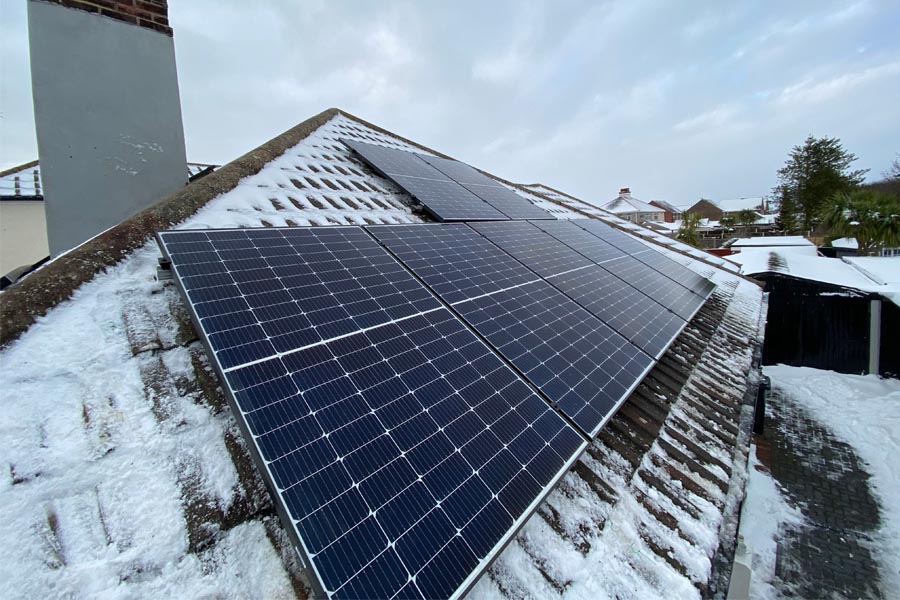
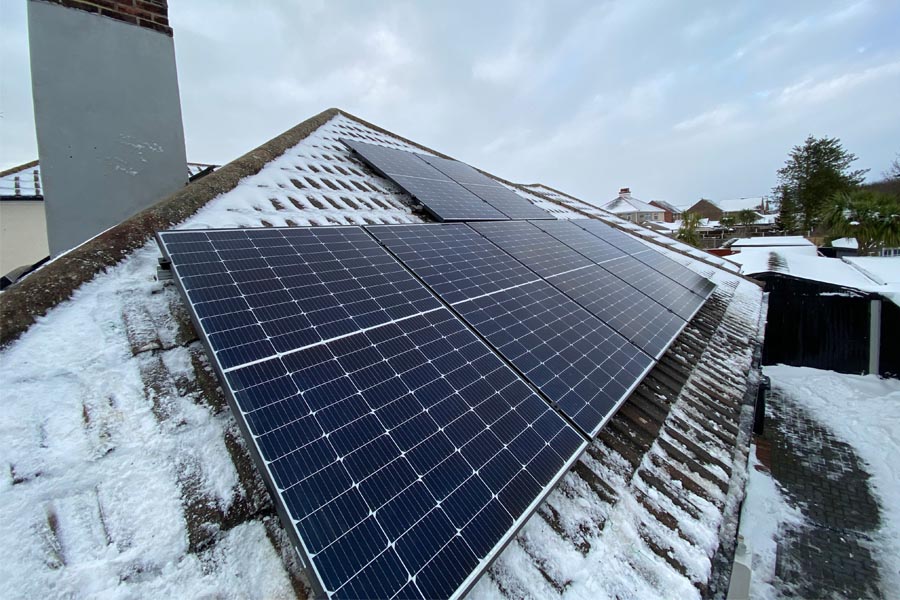
Fortunately, solar panels will still generate electricity even when covered in snow as sunlight is still able to reach solar panels. This ensures that the PV cells in the solar panels are still producing energy.
Additionally…
- The dark, reflective glass that covers solar panels works to melt snowfall before it becomes a nuisance and is detrimental to panel performance.
- The usual tilt of solar panels at around 30 to 45 degrees also helps snow from building up too much.
- It is worth mentioning that the quality, size, number and location of panels will also have an impact on the amount of electricity that is able to be generated.
Need More Answers? Get In Touch
If you live in the UK and would like more information regarding the most efficient Solar panels, or data on how solar panels work in the winter, and in other temperatures, get in touch on 01322 479369. Our team of Solar experts are always happy to help answer your questions.