Battery Storage

8 mins read

Is Enphase worth paying more for?

25 Sep 2026

What a former Enphase account manager says about inverter and battery warranties, price versus cost, and when paying more for equipment is actually worth it.
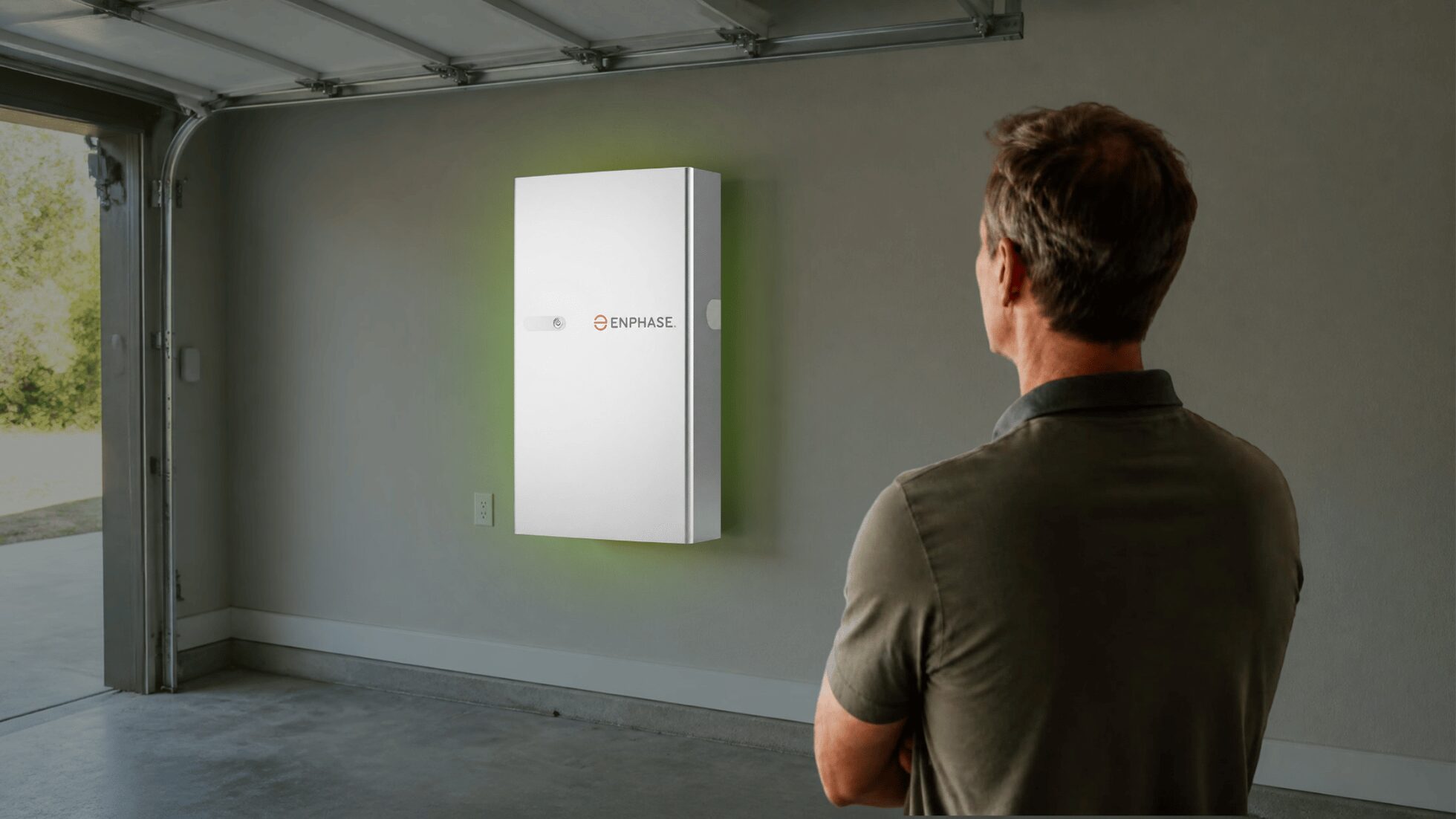
Enphase battery installed in a home garage
Take the first step toward energy independence today. get a quote
On this page

Every solar quote hides a choice most homeowners are never walked through: which brand of inverter and battery actually goes into the system, and what that decision costs beyond the number on the page. We asked Scott McDaniel, a former Strategic Account Manager at Enphase now working as an Upvolt Sales Consultant, whether the higher price is worth it. His answer isn't a sales pitch for Enphase, it's a straightforward look at price versus cost, the actual warranty numbers, and when a cheaper system is still the right call.

7 min read
Key Takeaways
    • Enphase inverters carry a 25 year warranty against a 10 year industry standard, and the battery warranty runs to 15 years against a 10 year standard.
    • The real comparison isn’t price on day one, it’s total cost over a system’s working life, including what happens when a component fails outside its warranty.
    • A cheaper system with a standard warranty can still be the right call, particularly for shorter ownership horizons or tighter budgets.
    • The decision that matters is going in with the trade-off understood, not finding out about it when something breaks.

Scott’s Answer: Price Versus Cost

Every solar quote comes with a choice buried inside it that most homeowners never get explained properly: which brand of inverter and battery actually goes on the roof and in the garage. Enphase is rarely the cheapest name on that list. So when a quote comes back higher because it specifies Enphase, is that extra cost actually buying you anything? We put the question to Scott McDaniel, one of our Sales Consultants in Upvolt Oxfordshire. Before joining Upvolt, Scott was a Strategic Account Manager at Enphase, working directly with the distributors, dealers and installers who sell their equipment day to day. He’s seen the pricing conversation from Enphase’s side of the table, and now he’s on ours, so we asked him for the honest version rather than the sales one.
“Everybody beats Enphase on price, but nobody beats it on cost. When you model a solar system over thirty years, the inverter and battery aren’t going to last that long. You’re going to need to replace something. The question is whether the warranty covers you when you do.”
— Scott McDaniel, Sales Consultant
Upvolt Oxfordshire (formerly Strategic Account Manager, Enphase)
That distinction, price against cost, is the one he comes back to throughout the conversation.

Price Is What’s on the Quote

Price is the number you’re given to get the system installed. It’s what most homeowners compare first, and understandably so, it’s the easiest number to put side by side across three or four quotes.

Cost Is What You Pay Over the System’s Life

Cost is what the system actually costs you across its working life, and that includes the bill nobody puts on the original paperwork: what happens when a part fails and the warranty has already run out. A cheaper quote can look like the better deal right up until you ask what’s actually covered, and for how long.

The Warranty Numbers, and Why They Matter More Than They First Look

This is where the gap between Enphase and a typical system actually shows up, not in performance on a sunny day, but in what’s covered on the day something goes wrong. At a Glance: Enphase vs Industry Standard Warranty
Warranty Enphase Industry standard
Inverter warranty 25 years 10 years
Battery warranty 15 years 10 years

Why the Standard 10 Year Warranty Is a Gap, Not a Norm

A standard inverter warranty runs out well before most solar systems have reached the end of their realistic working life. If a standard inverter fails in year 12 or 13, which is well within the range installers actually see, that’s a replacement cost that wasn’t in your original numbers, and it lands at a point when you’d reasonably expect the system to just be getting on with the job.

What Enphase’s Longer Warranty Is Actually Built Around

Enphase’s warranty is built around a different assumption: that the inverter and battery should be covered for most of the system’s realistic lifespan, not just the first decade of it. That’s the practical difference between the two numbers in the table above, not a marketing one.

What Actually Fails, and When

It’s worth knowing what tends to fail and when. Inverters are the component most likely to need replacing over a system’s lifetime, because they’re doing continuous electrical conversion work every day the system generates. A battery that’s cycled daily also degrades faster than most people expect if it’s outside its warranty window. Both are exactly the failure points the Enphase warranty is built to cover for longer.

Scott’s View on How to Actually Weigh This Up

“It’s better to spend a little more than you wanted to than a little less than you should have.”
— Scott McDaniel, Sales Consultant
Upvolt Oxfordshire
That’s not a line about Enphase being flawless, or the only equipment worth considering. It’s a point about how to approach a solar quote in the first place. Not just “what does this cost today”, but “what happens if something fails, and who’s paying for it when it does”. It’s the same logic most people already apply to other big household purchases, a boiler, a car, a roof, where the cheapest option upfront isn’t automatically the cheapest one over ten or fifteen years. Solar equipment isn’t any different, it’s just less familiar territory, so the trade-off is easier to miss.

The Honest Bit: When a Cheaper System Still Makes Sense

None of this means Enphase is automatically the right call for every roof, every budget, or every homeowner.

When a Standard Warranty Is the Sensible Choice

A cheaper system with a standard ten-year warranty can still be a sound choice, particularly if you’d rather keep the upfront cost down and deal with any replacement if and when it comes up, or if you’re planning to move house well within that ten-year window and won’t be the one dealing with it either way.

The Trade-Off to Go In Understanding

What matters is going into the decision with the trade-off actually understood, rather than finding out about it when something breaks in year 11 and the warranty ran out the year before.

Stay Connected with Upvolt

Get the latest updates on energy innovations, smart solutions, and exclusive offers.

Let’s Recap

The choice between Enphase and a standard-warranty system isn’t really about which brand is “better”, it’s about price versus cost. Enphase costs more upfront because it’s warrantied for closer to a solar system’s realistic working life: 25 years on the inverter and 15 on the battery, against a 10 year industry standard for both. What that means for your decision:
    • Price and cost are different questions. The cheapest quote isn’t automatically the cheapest system over ten or fifteen years, once you factor in what happens when something needs replacing.
    • Inverters and batteries are the components that fail. They’re doing continuous work every day the system runs, so warranty length on those two parts matters more than almost anything else on the spec sheet.
  • A standard warranty isn’t a red flag. It can be the right call if you’d rather keep upfront costs down, or if you won’t be in the house long enough for it to matter.
  • The trade-off is the thing to get right. Go in knowing what’s covered and for how long, rather than finding out when something breaks in year 11.
If you’re weighing up quotes right now and want a straight answer on what’s actually covered in each one, not just what’s cheapest, that’s a conversation worth having before you sign anything.

About Upvolt

Upvolt is a residential and commercial solar installer operating across Kent, Sussex and Oxfordshire, designing and installing solar, battery, heat pump and EV charger systems through its MCS-certified operating companies.
Scott McDaniel

Scott McDaniel

Sales Consultant, Upvolt Oxfordshire

Scott has worked in solar since 2012, including over a decade at Enphase, before joining Upvolt as a technical surveyor covering Oxfordshire. He trained on solar cell and panel manufacturing earlier in his career. Outside work, Scott plays baseball for the British Baseball Federation and runs Wiltshire Hog Roast, his own food truck, on weekends.

Share article

Share article

What are you looking for?

Choose one option to personalise your quote.

What's your typical monthly electricity bill?

A rough number is fine - we'll fine-tune it during your free consultation.

£155
per month
£20£75£130£190£250+
✓That's roughly 6,900 kWh per year
✓Typical for a large or high-usage home

Don't pay monthly?

Please enter a valid electricity usage to continue.

Where should we send your quote?

Your details help us send an accurate estimate and follow up.

Please complete name, email, phone, postcode and house number/name.