-
Now live! Generate even more savings with our Skygate system. Click here to learn more.

On this page
- What is Solar Energy?
- Why Solar Panels Are Worth the Investment in 2025
- Assessing Your Home's Suitability for Solar Panels
- How to Choose the Right Solar Panel System
- How to Find a Reliable Solar Panel Installer in the UK
- The Solar Panel Installation Process
- Maintaining and Monitoring Your Solar Panel System
- Let's Recap
- About UpVolt
- FAQ
Renewable Energy Hardware
12 mins read
All You Need to Know about Solar Panel Installation in the UK for 2025
7 Mar 2025Learn about the solar panel installation process, from roof assessments to system setup, ensuring efficient, safe, and long-lasting results for your home.

Take the first step toward energy independence today.
get a quote
On this page
- What is Solar Energy?
- Why Solar Panels Are Worth the Investment in 2025
- Assessing Your Home's Suitability for Solar Panels
- How to Choose the Right Solar Panel System
- How to Find a Reliable Solar Panel Installer in the UK
- The Solar Panel Installation Process
- Maintaining and Monitoring Your Solar Panel System
- Let's Recap
- About UpVolt
- FAQ
In 2025, solar panel installation continues to gain momentum across the UK, becoming an essential part of the country’s efforts to combat climate change and reduce energy costs. With advancements in solar technology, government incentives, and growing public awareness of sustainability, it’s no surprise that more and more homeowners and businesses are making the switch to solar energy.Â

If you're considering installing solar panels in the UK in 2025, this article will walk you through everything you need to know.
Key Takeaways
- Solar panels can significantly reduce energy bills by allowing homeowners to generate their own electricity.
- Most residential solar installations do not require planning permission, but listed buildings and homes in conservation areas may need approval.
- Choosing the right solar panel system depends on energy needs, roof space, and budget. Options include different panel types and battery storage for greater energy independence.
- Working with a certified installer ensures a smooth installation process and access to government incentives, while regular maintenance helps maximise efficiency.
What is Solar Energy?
Solar energy is the energy derived from the sun's rays, which is converted into electricity or heat through solar panels or other technologies. It's a clean, renewable resource that helps reduce reliance on fossil fuels and lowers carbon emissions. Solar energy offers a sustainable alternative for powering homes, businesses, and communities.
Why Solar Panels Are Worth the Investment in 2025
Solar panels are more affordable, efficient, and durable than ever before. With rising energy costs and the UK's ambitious renewable energy targets, solar power offers a reliable, cost-effective solution to reduce reliance on the grid and lower energy bills. Here's why solar panels are a smart choice:
Lower Energy Bills
Solar panels help lower energy bills by generating your own electricity, reducing reliance on the national grid. On average, a 3.5 kW system can save homeowners £140-340 annually. As energy prices rise, these savings can continue to grow.
According to the Energy Saving Trust, a typical 3.5 kW system could save a household between £140 and £340 annually.
Sustainability
Solar energy is a renewable resource that helps lower your carbon footprint. Installing solar panels could save one tonne of CO2 annually, contributing to the UK's goal of net-zero carbon emissions by 2050.
Government Incentives
The UK government offers incentives like the Smart Export Guarantee (SEG), which allows homeowners to sell excess energy back to the grid. Payments range from 1p-40p per kWh exported. For instance, E.ON's Next Export Exclusive tariff offers 16.5p per kWh, while British Gas provides 15.1p per kWh. This all helps offset the initial cost of solar panel installation.
Increased Property Value
Homes with solar panels can see their property value increase by up to 25%. These homes appeal to buyers who prioritise sustainability, long-term cost savings, and energy independence.
Energy Independence
Solar panels provide greater control over your energy generation, reducing reliance on the national grid. This helps protect against rising energy prices and, with battery storage, ensures you have power during potential outages.
Assessing Your Home's Suitability for Solar Panels
Before installing solar panels, it's important to evaluate your home's suitability. Factors like roof orientation, available space, and shading impact the effectiveness of the system. Here are some factors to consider:
Roof Orientation and Sunlight Availability
The direction your roof faces influences how much sunlight your panels receive:
- South-facing roofs capture 100% of available solar energy, making them the most efficient.
- East- and west-facing roofs receive 75–85% of optimal energy and remain a viable option.
- North-facing roofs capture only 50% or less, making them less ideal unless installed at an optimal angle.
The angle of your roof is also important for optimal performance. It should be between 30-40 degrees for your solar panels to absorb the most sunlight throughout the day.
Structural Integrity and Load-Bearing Capacity
Before installing solar panels, you need to assess your roof's structural integrity. Solar panels add weight to your roof (18–22 kg per panel), so it must be able to support the additional load. Key factors to consider include:
- Roof Age: Older roofs (20+ years) may require reinforcement to support the panels.
- Roof Material: Some materials, like slate or wooden shake, may need additional support to bear the weight.
- Condition of the Roof: Ensure there are no existing issues like leaks or damage that could affect the installation.
- Load-Bearing Capacity: A structural engineer can confirm if your roof meets the necessary weight-bearing requirements.
- Building Regulations: Ensure the roof complies with UK building standards and regulations for solar panel installation.
Planning PermissionÂ
In the UK, most residential solar panel installations fall under "permitted development" rights, meaning planning permission is not needed. However, this is subject to conditions such as:
- Ground-mounted panels must be at least 5 metres from property boundaries and cannot exceed a height of 4 metres.
- Flat roof installations should not be closer than 1 metre to the edge of the roof and cannot exceed 1 metre in height above the roof surface.
- Installations must not detract from the appearance or structural integrity of the property or its surroundings.
If your property is located in a conservation area, such as a National Park or Area of Outstanding Natural Beauty (AONB), or if it's a listed building, planning permission is typically required from your local planning authority.
Building Regulations
Along with planning permission, building regulations must be followed to ensure the structural integrity and safety of the installation. These regulations ensure that the system is installed properly and meets safety standards for things like electrical connections, mounting systems, and potential fire hazards.Â
For example, electrical components must comply with Part P of the Building Regulations and be installed by a qualified professional registered with a competent person scheme (e.g., NICEIC or NAPIT). A certified installer will be familiar with these requirements.
How to Choose the Right Solar Panel System
Choosing the right solar panel system for your home involves considering factors such as your energy needs, roof space, and budget. With various panel types and options for battery storage, selecting the best solution can help maximise energy savings and efficiency. Here's a guide to help you make an informed decision.
-
Assess Your Energy Needs
Start by evaluating your household's average energy consumption. The more energy you use, the larger the solar system you'll need. According to Ofgem, the energy regulator, the average household uses 2,700kWh per year. This will give you an idea of the size of the system you should consider.
The table below shows the estimated system size and annual energy output for different household types:
| Household size | System size | Annual output (kWh) |
| Small; 1-2 bedrooms | 3kW | 2,550 |
| Medium; 2-3 bedrooms | 4kW | 3,400 |
| Medium; 2-3 bedrooms | 5kW | 4,250 |
| Large; 4-5 bedrooms | 6kW | 5,100 |
-
Choose the Right Type of Solar Panels
There are different types of solar panels, each with its advantages:
- Monocrystalline Panels: High efficiency and performance, suitable for homes with limited roof space.
- Polycrystalline Panels: More affordable, but slightly less efficient than monocrystalline panels.
- Thin-Film Panels: Lightweight and flexible, but generally less efficient. Ideal for larger installations with ample space.
-
Consider Battery Storage
Adding a solar battery can help store excess energy generated during the day, allowing you to use it at night or during cloudy periods. This helps increase your self-consumption and reduces reliance on the grid. Solar batteries come in various sizes, typically ranging from compact 5 kWh models to larger 10-15 kWh systems.
Battery storage also provides backup power during outages, ensuring your home stays powered even when the grid is down. Some advanced systems feature smart energy management, such as Skygate®, that allows you to track usage and optimise energy consumption for even greater efficiency.
Stay Connected with Upvolt
Get the latest updates on energy innovations, smart solutions, and exclusive offers.
How to Find a Reliable Solar Panel Installer in the UK
Selecting the right solar panel installer is essential for a smooth, efficient, and long-lasting installation. With numerous companies offering solar installation services across the UK, it's important to take certain factors into account to ensure you choose a reputable and experienced professional. Here are key considerations to help you find a reliable solar installer:
-
Check for Certification and Accreditation
Look for installers who are certified by trusted industry bodies, such as the Microgeneration Certification Scheme (MCS). This ensures the company adheres to high-quality standards and is eligible for government incentives like the Smart Export Guarantee (SEG). MCS accreditation also indicates that the installer is up to date with the latest technologies and installation practices.
-
Experience and Reputation
Look for installers with a solid track record in the UK, ideally with a few years of experience. You can also check reviews and testimonials from previous customers to get a sense of the company's reputation. Platforms like Trustpilot and Google Reviews can provide insights into their customer satisfaction.
-
Ensure Ongoing Support and Warranty
Choose an installer that provides a robust warranty for both the panels and the installation work itself. A reputable company will offer long-term warranties of 10-25 years for solar panels and at least 1-2 years for labour. Additionally, check whether the installer offers aftercare services such as system maintenance, monitoring, and troubleshooting.
-
Evaluate Knowledge and Customer Service
A reliable installer should be knowledgeable about solar technology and able to answer any questions you may have. They should explain your options in simple terms, offer tailored advice based on your home's needs, and guide you through the whole process, from consultation to installation.
The Solar Panel Installation Process
Here's an overview of the key stages involved in getting your solar panel system up and running:
-
Consultation and Site Survey
The process begins with a consultation, either in person or online. During this phase, the installer will assess your home's roof, energy consumption, and shading to design the most effective solar solution. Some installers may also offer an online survey, where you can input your energy needs and roof details to get an initial system design.
-
System Design and Approval
After the site survey, your installer will propose a custom system design tailored to your energy needs. This includes selecting the type of solar panels, inverters, and whether a battery storage system is needed. The design is based on factors like roof space, orientation, and electricity consumption. Once the design is finalised, your installer will seek approval to proceed.
-
Installation and Electrical Connection
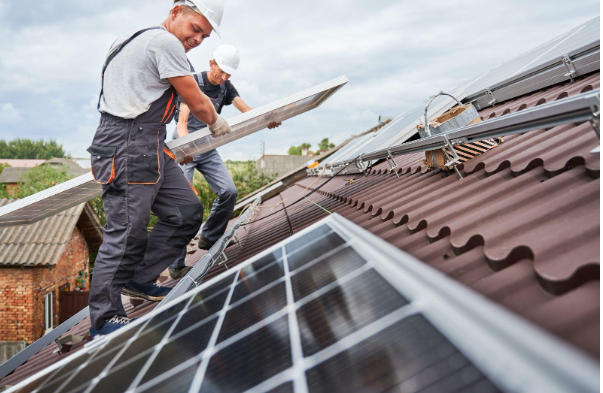
On installation day, the solar panel installation team will arrive at your home and begin the setup. The main steps include:
- Mounting Panels: The solar panels are securely fixed to the roof using mounting brackets.
- Inverter Installation: The inverter is installed to convert the DC electricity generated by the panels into AC electricity, which can be used by your home.
- Battery Installation (if applicable): If you're opting for battery storage, the battery unit will be installed to store excess solar energy for later use.
-
Electrical Connections and Wiring
Once the physical installation is complete, the team will connect the panels and inverter to your home's electrical system. This may involve wiring the system into your consumer unit (fuse box) and setting up a connection to the grid, if necessary. At this stage, the installer will also integrate any monitoring system you've chosen, which allows you to track energy production in real-time.
-
Testing and Final Inspection
The system will then undergo thorough testing to ensure it's functioning properly. This includes checking the inverter, ensuring all wiring is correctly connected, and verifying that the system is producing electricity as expected. A final inspection is typically conducted to ensure the installation meets all safety and regulatory standards.
Maintaining and Monitoring Your Solar Panel System
While solar panels require minimal upkeep, regular checks help prevent performance issues and extend their lifespan.
Regular cleaning is essential to remove dirt, dust, and debris that can block sunlight and reduce efficiency. In most cases, cleaning once or twice a year with water and a soft brush is sufficient, but homes in areas with heavy pollution or dust may need more frequent cleaning.
Routine inspections help identify potential issues before they affect performance. Checking for cracks, loose wiring, or corrosion on panel frames can prevent costly repairs. The inverter should also be inspected, as faults in this component can impact the entire system.
Many modern solar systems come with monitoring apps, which provide insights into system output. A sudden drop in energy production may indicate shading issues, dirt buildup, or equipment malfunctions that need immediate attention.
Let's Recap
As solar technology advances and energy prices continue to rise, solar panels remain a smart investment for UK homeowners in 2025. From reducing electricity bills to increasing property value and contributing to a greener future, solar energy offers long-term benefits.
Before installing, assess your home's suitability, choose the right system, and work with a certified installer to ensure a smooth process. With proper maintenance and monitoring, your solar panels will continue to generate clean, cost-effective energy for years to come.
About UpVolt
UpVolt specialises in delivering smart solar energy solutions tailored to homes in the UK. From personalised system design to professional installation and ongoing support, we offer comprehensive services to help you achieve energy independence.
Our team of highly skilled engineers uses premium-quality equipment to guarantee reliable performance, while our innovative Skygate® platform provides intelligent energy optimisation for maximum efficiency.
Request your free solar panel system quote today!
FAQ
How long do solar panels typically last in the UK climate?
Solar panels in the UK typically last 25 to 30 years, with many still generating electricity beyond this period at reduced efficiency. Their durability is well-suited to the UK climate, as they can withstand rain, wind, and occasional snow. Regular maintenance helps ensure optimal performance throughout their lifespan.
Do I need planning permission for solar panel installation?
In most cases, solar panel installations in the UK fall under "permitted development" rights, meaning planning permission is not required. However, if your property is a listed building or located in a conservation area, National Park, or Area of Outstanding Natural Beauty (AONB), you may need approval. It's always best to check with your local planning authority to confirm any specific requirements.
What maintenance do solar panels require?
Solar panels require minimal maintenance, but occasional cleaning helps remove dirt, dust, and debris that can reduce efficiency. Routine inspections can identify potential issues such as loose wiring, shading problems, or damage to the panels. Most modern systems include monitoring tools to track performance and detect any faults early.
How long does a solar panel installation take?
A typical solar panel installation in the UK takes 1-3 days. From start to finish, including design and approval, it takes about 4-8 weeks.
Are solar batteries worth investing in?
Solar batteries can be a worthwhile investment if you want to store excess energy for use at night or during power outages. They help reduce reliance on the grid and maximise your solar savings, especially if your energy consumption is high.

Alex Lomax
CEO & Co-Founder
Share article


Share article