-
Now live! Generate even more savings with our Skygate system. Click here to learn more.

On this page
- What Flexible And Thin-Film Solar Actually Is
- Where Flexible And Thin-Film Solar Performs Best
- Practical Advantages For UK Homeowners
- Important Limitations You Should Consider
- Are Flexible Panels Cost-Effective In The UK?
- Where They Don't Make Sense For Most Homes
- How Upvolt's Skygate™ Maximises Flexible Solar Benefits
- Let's Recap
- About Upvolt
- FAQ
Solar Photovoltaic
14 mins read
Flexible And Thin-Film Solar Panels: Practical Uses In The UK
26 Dec 2025Where flexible and thin-film solar panels work best and when they fall short for UK homes.
Take the first step toward energy independence today.
get a quote
On this page
- What Flexible And Thin-Film Solar Actually Is
- Where Flexible And Thin-Film Solar Performs Best
- Practical Advantages For UK Homeowners
- Important Limitations You Should Consider
- Are Flexible Panels Cost-Effective In The UK?
- Where They Don't Make Sense For Most Homes
- How Upvolt's Skygate™ Maximises Flexible Solar Benefits
- Let's Recap
- About Upvolt
- FAQ
Flexible and thin-film solar technologies are reshaping what is possible for UK households that cannot accommodate traditional rigid panels. Their lightweight construction, bendable formats, and strong low-light behaviour make them an increasingly practical solution for curved roofs, heritage properties, outbuildings, and other spaces where conventional silicon modules simply cannot go.
This article explores where these systems perform best, the trade-offs to consider, and how smart energy management maximises their value.

14 min read
On this page
- What Flexible And Thin-Film Solar Actually Is
- Where Flexible And Thin-Film Solar Performs Best
- Practical Advantages For UK Homeowners
- Important Limitations You Should Consider
- Are Flexible Panels Cost-Effective In The UK?
- Where They Don’t Make Sense For Most Homes
- How Upvolt’s Skygate® Maximises Flexible Solar Benefits
- Let’s Recap
- About Upvolt
- FAQ
Key Takeaways
- Flexible and thin-film panels offer installation opportunities on surfaces where traditional solar panels cannot be used.
- Lightweight construction reduces structural load, making solar viable for older or low-capacity roofs.
- Performance remains steadier than silicon in cloudy or low-light UK conditions, improving annual generation reliability.
- Smart energy management systems significantly increase the long-term value of flexible solar by coordinating generation, storage, and demand.
What Flexible And Thin-Film Solar Actually Is
Flexible and thin-film solar technology represents a major shift in how solar power can be installed and used. Instead of relying on heavy, rigid silicon modules, these panels use ultra-thin photovoltaic layers that allow them to bend, curve, and adapt to surfaces where traditional systems cannot go.
Their lightweight construction opens new possibilities for homes, vehicles, and portable power, reflecting how solar panel technology is evolving beyond traditional formats.
The global market for flexible solar panels reflects this momentum. Valued at $464.31 million in 2020, it is projected to almost double to $914.07 million by 2030. This highlights the rapidly growing demand for lightweight and versatile solar solutions.
Made from Lightweight and Bendable Materials
At the core of thin-film technology are advanced materials engineered for flexibility and ease of installation. These panels are built with:
- Microscopic layers of photovoltaic material
- Lightweight bases such as plastics, metals, or engineered fabrics
- Ultra-thin profiles that reduce weight without sacrificing generation capability
This structure creates panels that are far lighter and more adaptable than conventional silicon modules.
Different from Traditional Rigid Silicon Panels
Where standard solar panels rely on thick, brittle silicon wafers, thin-film panels use alternative materials that tolerate bending and movement. This makes them ideal for locations where rigid panels would be impractical or impossible to mount.
Designed for Surfaces That Standard Panels Cannot Fit
Thin-film technology expands what is physically possible with solar. Because these panels can curve and flex, they can be installed on surfaces that rigid modules cannot accommodate. This includes:
- Curved architectural features
- Caravans and campervans
- Boats and marine environments
- Portable power solutions
- Lightweight structures with limited load capacity
Flexible solar is not a replacement for traditional panels, but it is a breakthrough for situations where versatility, weight reduction, and ease of installation matter most.
Where Flexible And Thin-Film Solar Performs Best
Flexible and thin-film solutions represent some of the most practical innovations in solar for properties that fall outside the scope of conventional panel installation. Their lightweight, adaptable construction allows them to perform exceptionally well in locations that rigid silicon modules cannot accommodate.
For properties with unconventional architecture or practical limitations, these panels often provide the only viable solar solution.
Curved or Irregular Roof Shapes
Thin-film systems excel on roofs that traditional modules simply cannot fit. Their bendable, ultra-light design allows them to follow the contours of curved, uneven, or architecturally complex surfaces. This makes them ideal for heritage buildings, modern architectural designs, and any roof where rigid frames would fail.
Sheds, Garages, and Outbuildings
Many outbuildings cannot support the weight of conventional solar panels. Flexible CIGS modules and peel-and-stick thin-film solutions are perfect for lightweight metal, timber, or composite roofs. They turn smaller, previously unsuitable structures into productive solar assets with minimal structural stress.
Carports and EV Charging Shelters
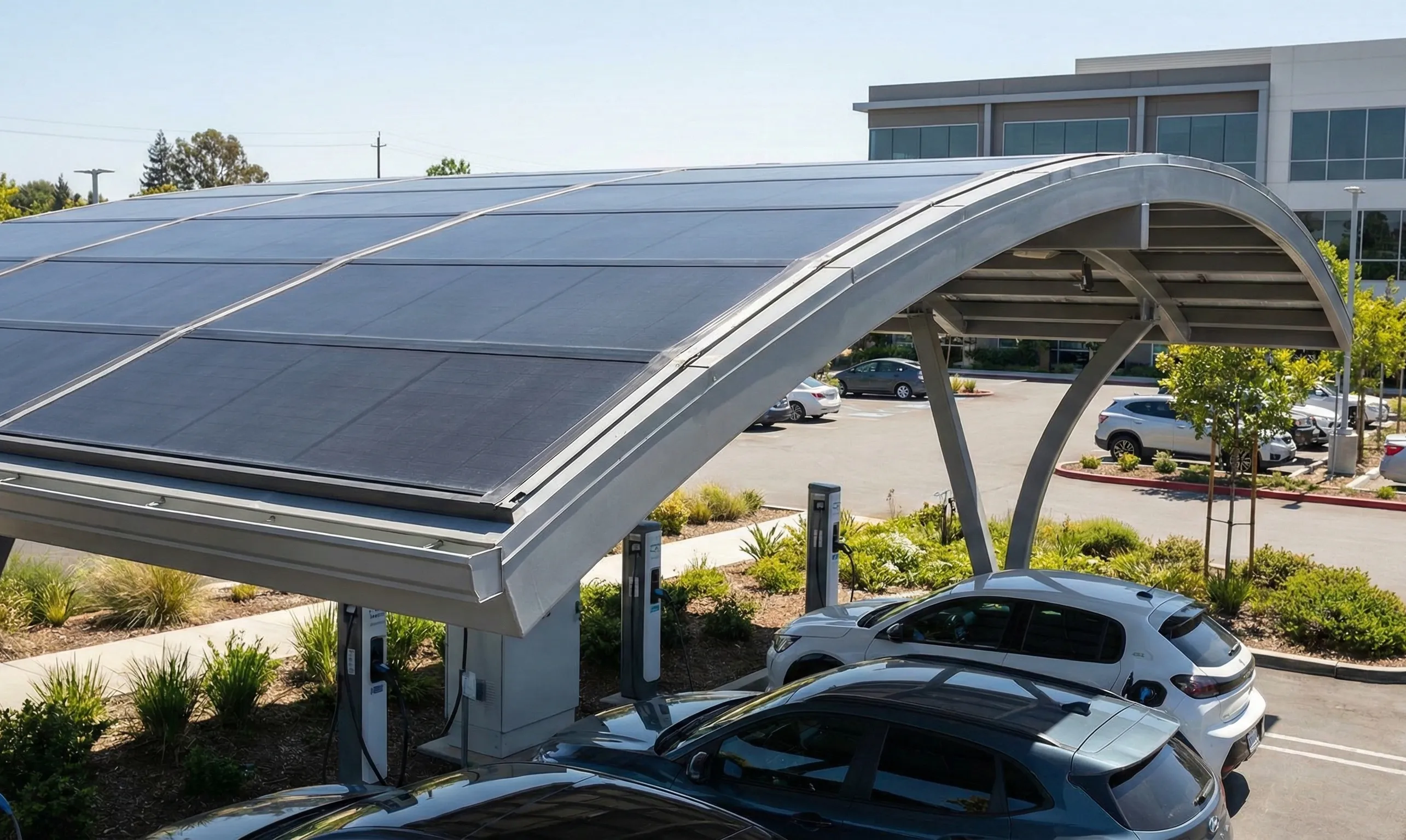
Thin-film solar is a strong fit for EV infrastructure. Its low profile and flexible design integrate cleanly into carports and charging shelters, providing both shade and renewable power for electric vehicles without heavy mounting equipment.
Off-Grid and Mobile Power
Thin-film technology shines in environments that demand portability. Its lightweight form factor makes it ideal for motorhomes, caravans, boats, and mobile workstations, providing reliable off-grid energy without complicated installation.
Flexible and thin-film technologies expand where solar can be installed, turning previously unusable surfaces into productive renewable-energy assets.
Practical Advantages For UK Homeowners
Modern lightweight solar panels introduce benefits that traditional rigid modules simply cannot offer. Their versatility, low structural impact, and steadier performance in cloudy conditions make them an attractive option for many UK households.
Lightweight Design for Varied Roof Structures
Traditional silicon panels weigh around 18 kg each, which can overwhelm older roofs or lightweight structures. By contrast, thin-film panels are up to 60% lighter, reducing stress on the roof and expanding the number of homes that can safely support solar.
This makes them particularly useful for:
- Heritage homes with weaker roof supports
- Conservatories and glass structures
- Sheds, garages, and other light outbuildings
- Roofs where heavy mounting systems are unsuitable
Lightweight construction often removes the need for reinforcement, lowering costs and simplifying installation.
Simplified Solar Panel Installation
The flexible format speeds up installation dramatically. These panels require fewer mounting components, create fewer roof penetrations, and allow installers to work more efficiently than they can with rigid modules.
Homeowners benefit from:
- Faster installation timelines
- Less invasive attachment methods
- Reduced labour costs
- Lower risk of structural or waterproofing issues
This streamlined approach is appealing for households seeking minimal disruption.
Enhanced Performance in UK Weather Conditions
The UK’s cloudy and low-light conditions often reduce the output of traditional silicon panels. Thin-film technologies respond differently, maintaining more stable performance and continuing to generate during overcast periods.
| Panel Type | Performance in Low Light | Efficiency Consistency |
| Traditional Silicon Panels | Noticeable Reduction | Highly Variable |
| Thin-Film Panels | Minimal Drop-Off | More Stable |
For shaded roofs, north-facing orientations, or areas with frequent cloud cover, this reliability can translate into a higher annual yield.
Aesthetic Flexibility
Building-integrated or curved roof designs often struggle with standard rigid panels. Thin-film modules adapt to these shapes, offering a low-profile, modern look that blends into the structure rather than sitting on top of it.
They offer:
- Greater freedom in placement
- A smoother and more discrete visual finish
- Options for colour and form that complement the property
This makes them well-suited to conservation areas or design-sensitive projects.
Important Limitations You Should Consider
Thin-film and flexible solar technologies offer exciting possibilities, but they also come with trade-offs that matter when designing a UK home energy system. Understanding these limitations ensures you make an informed choice about whether they are the right fit for your property.
Lower Efficiency Compared to Premium Panels
High-performing crystalline silicon panels remain the benchmark for residential efficiency. According to the Federation of Master Builders, typical efficiency ratings break down roughly as follows:
- Monocrystalline panels: ~15–20% efficiency
- Polycrystalline panels: ~13–16% efficiency
- Thin-film panels: ~7–10% efficiency
Flexible thin-film panels sit at the lower end of this spectrum, meaning they produce noticeably less electricity per square metre than premium monocrystalline modules. For homes with limited roof area or higher annual energy demand, this reduced efficiency is an important trade-off to consider.
However, the thin-film category is evolving. Materials such as Cadmium Telluride (CdTe), Copper Indium Gallium Selenide (CIGS), and Gallium Arsenide (GaAs) are being used to develop more efficient thin-film modules than earlier-generation products.
Increased Space Requirements
Because output per panel is lower, flexible systems require significantly more surface area to reach the same system size as rigid panels.
Key implications:
- Larger coverage needed to match the output of crystalline modules
- 50–100% more roof area required in many cases
- Space constraints may limit how much usable solar you can install
For properties with small or complex roofs, a thin-film system may struggle to deliver the desired annual generation.
Durability and Warranty Concerns
Flexible panels are built with lightweight substrates rather than rigid glass, which makes them more vulnerable to wear, heat exposure, and long-term material fatigue.
As a result:
- Premium silicon panels come with 25–30-year performance warranties
- Most flexible products are covered for 10 years
- Long-term degradation rates can be higher
If you plan to rely heavily on solar for household energy, lifespan becomes a major factor in your return on investment.
Limited Product Certification
Certification affects both system compatibility and financial incentives.
Important limitations include:
- Fewer flexible modules currently hold MCS certification in the UK
- Some products cannot be paired with certain inverters or battery systems
- Export schemes or Smart Export Guarantee (SEG) payments may not apply without certified equipment
This lack of certification does not reflect poor technology, but rather that the market is still maturing.
Are Flexible Panels Cost-Effective In The UK?
The value of flexible and thin-film solar cells depends heavily on where and how they are used. While they cannot match the efficiency of premium crystalline panels, their lower weight, simpler installation, and specialised use cases can make them a cost-effective choice in situations where traditional solar simply is not viable.
When Lower Hardware Cost Offsets Lower Output
Flexible solar panels present a different kind of financial equation. They are often cheaper to manufacture and easier to install, which reduces overall system costs and can help balance out their lower energy generation. They offer practical advantages such as:
- Faster, less complex installation
- Lower labour and mounting expenses
- Viable solar generation on surfaces standard panels cannot use
Where Conventional Panels Would Be Impossible
For some UK properties, traditional solar panels are simply not an option. Flexible panels open the door to installations that would otherwise be ruled out.
| Installation Scenario | Flexible Panel Advantage |
| Weak Roof Structures | Lightweight alternative |
| Curved or Irregular Surfaces | Adaptable mounting |
| Heritage or Listed Buildings | Minimal structural impact |
These use cases highlight where flexible solar can deliver excellent value despite lower efficiency.
Long-Term Value Depends on Installation Environment
Cost-effectiveness improves when the system is matched correctly to its environment. While high-output applications still favour conventional panels, thin-film technology can be a smart investment for outbuildings, lightweight structures, mobile setups, or roofs that cannot support rigid modules.
Economics Improve With Smart Energy Management
Flexible solar becomes significantly more valuable when paired with intelligent controls and storage. Smart load shifting, time-of-use optimisation, and battery integration allow the system to make better use of every kilowatt generated, increasing the long-term return on investment.
Stay Connected with Upvolt
Get the latest updates on energy innovations, smart solutions, and exclusive offers.
Where They Don’t Make Sense For Most Homes
Flexible and thin-film solar panels offer unique advantages, but they are not the right choice for the majority of UK households. When roof space, long-term output, or future electrification plans matter, traditional crystalline silicon panels outperform them in nearly every category.
Knowing when not to choose flexible panels helps avoid disappointing performance and protects your long-term return on investment.
Standard Pitched Roofs with Robust Structure
If your roof can safely support the weight of rigid panels, monocrystalline modules are almost always the better option. They deliver far higher efficiency, stronger warranties, and significantly more lifetime energy generation. On a typical UK pitched roof, flexible panels offer no meaningful advantage and reduce overall system performance.
Homes with Limited Roof Space
Where space is tight, every square metre counts. Flexible thin-film products generate substantially less electricity per unit of area, making them unsuitable for compact roofs, dormer-heavy layouts, and homes targeting high annual output. In these situations, switching to flexible panels can reduce total generation by a large margin and make future electrification far harder.
High-Energy Households Planning Electrification
If your home will eventually support a heat pump, EV charger, or battery storage, you need as much solar capacity as possible. Flexible panels simply cannot deliver the sustained output required for high-consumption homes. Crystalline panels allow you to build a system that grows with your needs instead of limiting what your home can support.
When Aesthetics Aren’t the Primary Concern
Flexible modules are often chosen for their discreet appearance, but if your priority is lowering bills, reducing carbon footprint, or achieving energy independence, efficiency matters far more than aesthetics. In these cases, premium monocrystalline panels remain the most cost-effective and future-proof solution.
How Upvolt’s Skygate® Maximises Flexible Solar Benefits
Homes that rely on lightweight or thin-film solar panels need smart management to get the strongest return, especially when panel efficiency is lower than traditional crystalline systems. Skygate®, Upvolt’s intelligent home energy platform, is designed to elevate these installations by coordinating generation, storage, and household demand with far greater precision.
Optimising Energy Efficiency
Skygate® ensures that every unit of solar energy is used at the most valuable moment. The platform drives meaningful savings through:
- Intelligent load prioritisation
- Pre-heating and other timed energy routines during strong generation windows
- Smart battery charging strategies that favour clean solar power
This coordination helps compensate for the reduced output of thin-film panels and turns available sunlight into practical household value.
Smart System Coordination
Thin-film systems perform best when supported by a wider energy ecosystem. Skygate® unifies:
- Solar PV generation
- Home battery storage
- Grid imports and exports
- Controllable appliances
By treating all components as one system, Skygate® improves stability, reduces waste, and strengthens overall performance.
Enhanced Monitoring Capabilities
Understanding real-time behaviour is essential with lower-efficiency solar. Skygate® gives homeowners clear visibility into:
- How much power their panels are producing
- Which appliances are consuming the most energy
- Opportunities to shift usage for greater solar self-consumption
This level of insight makes it easier to make informed adjustments that improve long-term returns.
Future-Proofed Solar Integration
As solar innovations advance, Skygate® allows you to evolve your setup without rebuilding it. The platform supports:
- Hybrid systems combining flexible and rigid panels
- Future battery upgrades
- Technology add-ons such as EV chargers or heat pumps
This ensures your energy system remains adaptable, efficient, and ready for the next generation of renewable technologies.
Skygate® turns thin-film installations from a compromise into a well-optimised, intelligently managed energy system built for today’s needs and tomorrow’s innovations.
Let’s Recap
Flexible and thin-film solar panels open up installation possibilities that rigid systems cannot address, offering a practical option for curved roofs, lightweight structures, off-grid setups, and mobile applications. While these technologies deliver important advantages in weight, versatility, and low-light behaviour, they also come with limitations, including lower efficiency, shorter warranties, and greater space requirements.
For UK homeowners, the strongest results appear when flexible panels are paired with intelligent energy management. Smart scheduling, battery optimisation, and coordinated system control help offset lower panel efficiency and ensure that every unit of clean energy is used effectively.
With the right design and supporting technologies, flexible solar can transform challenging or previously unsuitable surfaces into productive renewable-energy assets.
About Upvolt
Upvolt helps UK households build smarter, more connected renewable-energy systems that are simple to manage and deliver meaningful long-term value. From solar panels and battery storage to EV chargers and heat pumps, our technology is designed to work together as one coordinated ecosystem.
Skygate®, our intelligent energy management platform, brings all these components into a single, easy-to-use system. It analyses solar generation, tracks household energy use, manages tariffs, and synchronises heating and storage so every kilowatt is put to work efficiently.
If you want to understand how flexible solar or traditional modules could work for your home, complete our online survey and receive a free, no-obligation quote.
FAQ
What are flexible and thin-film solar panels?
Flexible and thin-film solar panels use ultra-thin photovoltaic layers applied to lightweight materials, allowing them to bend and adapt to surfaces that rigid silicon panels cannot. They are ideal for curved roofs, lightweight structures, and mobile or off-grid applications.
How do thin-film solar panels differ from traditional solar panels?
Traditional panels use rigid crystalline silicon cells and offer higher efficiency, while thin-film panels rely on lightweight materials that prioritise flexibility and ease of installation. This makes thin-film better suited for unconventional surfaces, though they typically produce less electricity per square metre.
Where are flexible solar panels most effective in the UK?
Flexible panels work best on structures that cannot support heavy loads, including conservatories, sheds, garages, metal roofs, and irregular or curved surfaces. They are also highly effective for caravans, boats, off-grid setups, and locations where traditional panels cannot be securely mounted.
What are the main limitations of flexible solar panels?
The key limitations include lower efficiency than monocrystalline panels, increased space requirements, shorter warranties, and fewer MCS-certified products. These factors mean they are not ideal for space-constrained roofs or homes with high annual electricity demand.
What solar technologies are most promising?
Emerging options such as perovskite solar cells, tandem perovskite–silicon designs, and high-performance thin-film materials like CIGS and CdTe are driving the next wave of solar innovation. These technologies aim to improve efficiency, durability, and adaptability across a wider range of UK homes.

Alex Lomax
CEO & Co-Founder
Share article


Share article