-
Now live! Generate even more savings with our Skygate system. Click here to learn more.

EV Charger
8 mins read
How Long Does It Take to Charge an Electric Vehicle (EV)?
29 Mar 2025Learn how long it takes to charge an EV, from home chargers to rapid stations. Discover factors that affect charging speed and tips to reduce wait times.

Take the first step toward energy independence today.
get a quote
Charging an electric vehicle (EV) is a key consideration for any EV owner. Whether you're topping up at home overnight or using a rapid public charging station, the time it takes to charge your EV depends on several factors. These include the type of charger, battery size, and even weather conditions.

In this guide, we’ll break down charging times for different charger types, explain the variables affecting charging speed, and help you find the best charging solution for your needs.
Key Takeaways
- Charging times vary based on charger type—home chargers can take several hours, while rapid chargers can provide an 80% charge in under 60 minutes.
- Battery size matters—larger batteries take longer to charge, but faster chargers can significantly reduce wait times.
- Weather and temperature can impact charging efficiency, especially in extreme cold or heat.
- Smart charging and solar integration can optimise charging times and reduce costs.
EV Charging Times by Charger Type
The time required to charge an electric vehicle depends on the power output of the charger being used. EV chargers fall into three main categories: slow, fast, and rapid.
Slow Charging (3kW - 7kW)
Slow charging is the most accessible but also the slowest way to charge an electric vehicle. It is commonly used for home charging, where speed is less important because vehicles can be plugged in overnight. While slow chargers are convenient and require no special infrastructure, they may not be practical for those who drive frequently or have large battery capacities.
- 3-Pin Plug (2.3kW - 3kW): A standard UK household socket can take over 32 hours to fully charge an EV. This is the slowest and least efficient method.
- Dedicated Home Charger (3.6kW - 7kW): A 3.6kW wall box can charge most EVs in 20 hours, depending on battery size.
- Fast Charging (7kW - 22kW)
Fast Charging (7kW - 22kW)
Fast charging is widely used for everyday EV charging at home, workplaces, and public locations such as supermarkets and car parks. It offers a good balance between charging speed and convenience.Â
- 7kW Charger: Charges a typical EV within 10 hours (ideal for overnight charging).
- 22kW Charger: Can reduce charging times to 3-4 hours, but requires a three-phase power supply, which most UK homes don’t have.
Rapid and Ultra-Rapid Charging (43kW - 350kW)
Rapid and ultra-rapid chargers are the fastest charging options available, primarily found at motorway service stations, petrol stations, and high-traffic urban locations. These chargers are designed for drivers who need a quick top-up during long journeys.
- 50kW Rapid Charger: Provides an 80% charge within 60 minutes.
- 150kW+ Ultra-Rapid Charger: This can fully charge your electric car in as little as 30 minutes, but only certain EVs support this speed.
What Affects EV Charging Speed?
Several factors affect EV charging time. While charger power is key, battery size, vehicle specifications, and environmental conditions also play a major role.
-
Battery Size & State of Charge
Larger battery capacities (measured in kWh) take longer to charge, as they require more energy to reach full capacity. Additionally, the charging process slows down as the battery nears 100%—a built-in mechanism designed to protect battery health and longevity. Many EVs charge quickly up to around 80%, after which the speed decreases significantly.
-
Charger Power Output
Higher-power chargers deliver energy faster, meaning that an EV plugged into a 50kW charger will charge much quicker than one using a 7kW charger. However, not all EVs can accept the maximum output of a high-powered charger, so the actual charging speed depends on the vehicle's capabilities.Â
Charging speed is also affected by whether the charger is AC (alternating current) or DC (direct current). Most home chargers use AC power, while rapid public chargers use DC, which allows for significantly faster charging.
-
Onboard Charger Limitations
Each EV has a built-in charger that dictates the maximum amount of power it can accept. Even if you plug into a high-powered charger, your EV will only charge as fast as its onboard charger allows. This means that upgrading to a more powerful charging station won't necessarily speed up charging if your EV has a lower onboard charging capacity.
For example, the Renault Zoe supports 22kW AC charging, making it one of the fastest-charging EVs on AC power. In contrast, a Nissan Leaf is limited to 6.6kW AC charging, so even if it’s plugged into a 22kW charger, it won’t charge any faster than 6.6kW.
-
Temperature & Weather Conditions
Cold weather can significantly impact electric vehicle (EV) performance, notably by slowing down charging speeds and reducing battery efficiency. Lithium-ion batteries operate optimally within specific temperature ranges; in cold conditions, their internal resistance increases, leading to decreased efficiency and extended charging times. In freezing temperatures (–7°C to –1°C), EVs can experience up to a 30% reduction in miles of range, and rapid charging times may increase by 20–30%.
To mitigate these issues, many EVs are equipped with battery thermal management systems that regulate temperature to enhance charging performance. Pre-conditioning—warming up the battery before charging—can also help reduce cold-weather charging delays.Â
Stay Connected with Upvolt
Get the latest updates on energy innovations, smart solutions, and exclusive offers.
-
Smart Charging & Solar Integration
Smart chargers allow EV owners to optimise charging times by using off-peak electricity tariffs, reducing costs and lowering demand on the national grid. These chargers can be programmed to charge when electricity rates are lowest, making EV charging more affordable.
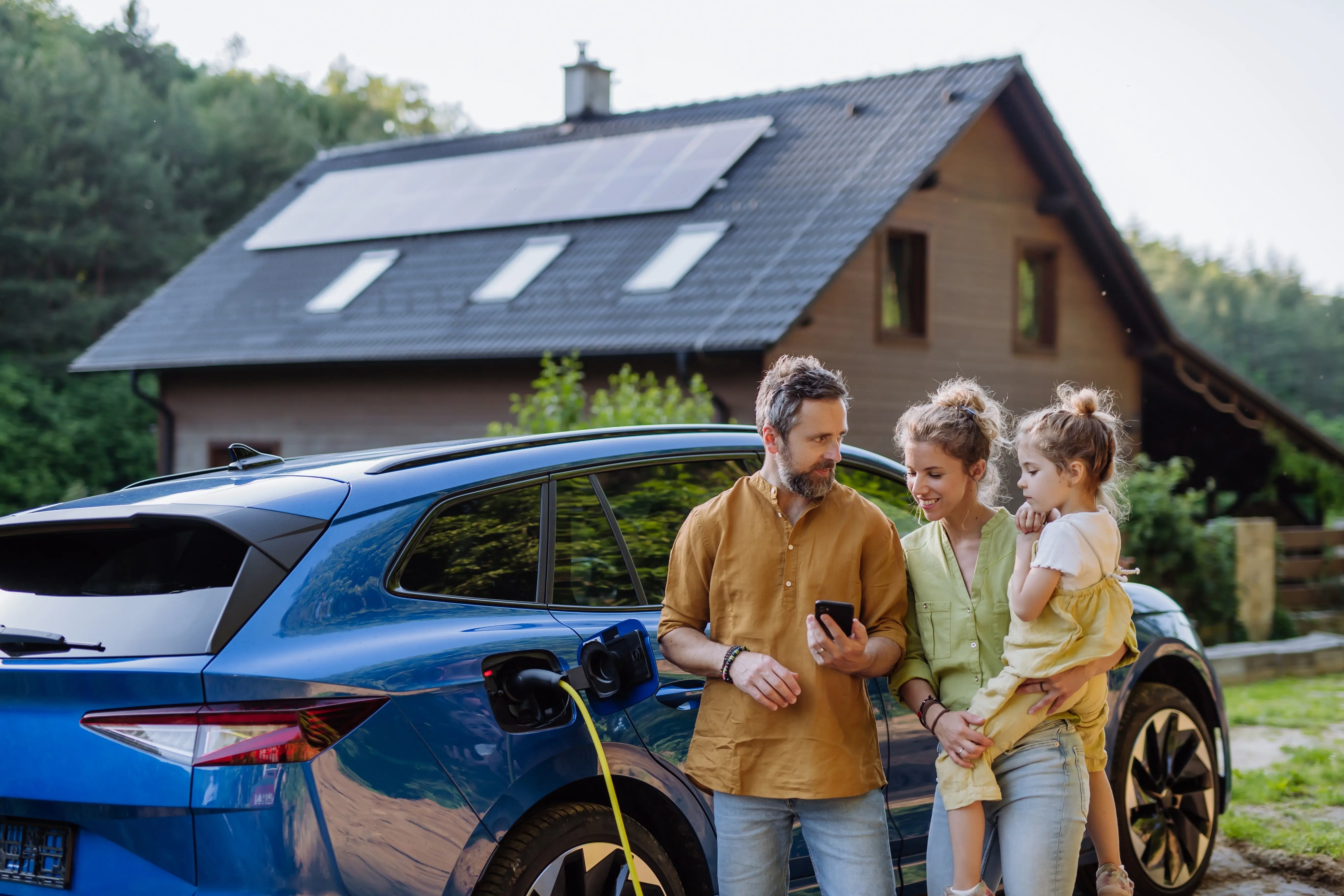
For those with home solar panels, solar integration allows EVs to charge using excess solar energy. This not only reduces electricity bills but also minimises reliance on fossil-fuel-generated power, making EV charging even more sustainable.Â
UpVolt’s Skygate™ takes smart charging to the next level by seamlessly connecting EV chargers, solar panels, and home batteries into a unified energy ecosystem. By dynamically managing energy flow, Skygate™ ensures that EVs are charged with the cleanest and cheapest electricity available.
How to Reduce EV Charging Time
How long it takes to charge an electric car varies based on many factors, but there are effective strategies to speed up the process. Here are some simple tips to help you reduce charging time:
- Use a dedicated home charger: A 7kW charger delivers faster charging compared to the slower 3-pin plug, which is less efficient for regular use.
- Charge during off-peak hours: Charging at night when electricity rates are lower can save you money and reduce strain on the grid.
- Utilise solar energy: Smart chargers can prioritise excess solar power, charging your EV with clean, renewable energy while reducing electricity costs.
- Find ultra-rapid chargers: If your EV supports ultra-rapid charging, using these chargers can dramatically reduce charging time.
- Pre-condition your battery: For EVs in colder weather, pre-conditioning the battery by heating it before charging can enhance charging efficiency and reduce charging delays.
Let's Recap
Charging times vary depending on your EV, charger type, and conditions. For most drivers, a 7kW home charger is the best all-around option, offering overnight charging convenience. For longer journeys, rapid chargers provide quick top-ups, ensuring you stay on the road without long delays
By choosing the right charging setup and taking advantage of smart energy solutions, you can charge your EV efficiently while keeping costs low.
About UpVolt
UpVolt specialises in providing smart solar energy solutions tailored to UK homes, including solar-optimised EV chargers that seamlessly integrate with your solar system. From planning and system design to professional installation, commissioning, and ongoing support, we offer a comprehensive service to help you achieve energy independence.
Our smart EV chargers support charge rates from 7kW to 22kW, with both local and remote load management to ensure optimal performance. With a variety of charging modes, you’ll have complete flexibility whether charging at home or on the go.
Request your free electric vehicle charging installation quote today!
FAQ
How long does it take to fully charge an electric car?
The time it takes to charge an electric vehicle varies based on several factors, including the type of charger used, the battery size of the vehicle, and the current charge level of the car battery. Generally, it can take anywhere from 8-10 hours to charge an EV from empty to full using a 7kW charge point.
What do I need to charge my electric car at home?
To charge an EV at home, you’ll need a dedicated home charger, typically a 7kW wall box, which provides faster and more efficient charging compared to using a standard three-pin plug socket. Many EV owners choose to install a wall box charger, which can be easily mounted in a garage or driveway and offers more convenience and safety compared to a regular socket.
What affects charging speed?
Several factors affect charging speed, including the type of charger, battery size, and the vehicle’s onboard charging capabilities. Larger batteries take longer to charge, and not all EVs can handle the maximum output of high-powered chargers. Environmental conditions, especially extreme cold or hot weather, can also slow down charging, as lithium-ion batteries perform less efficiently in these conditions.
Can I charge my electric vehicle at public charging points?
Yes, you can charge your EV at public charging points. Public chargers are widely available at locations such as shopping centers, car parks, and along motorways. Some chargers may require an access card or mobile app to initiate the charging session.
Where can I find rapid charge points?
You can find your nearest charging stations by using various apps and websites that map out charging locations. To locate rapid chargers near you, you can use apps and websites like Zap-Map, PlugShare, or ChargeMap, which provide real-time maps of charging stations, including their types and availability.

Alex Lomax
CEO & Co-Founder
Share article


Share article