-
Now live! Generate even more savings with our Skygate system. Click here to learn more.

Regulation
7 mins read
Do You Need Planning Permission for Solar Panels in Oxfordshire?
20 Jan 2025Learn about the planning permission needed for solar panel installation in Oxfordshire. Find out how to apply and ensure compliance.
Take the first step toward energy independence today.
get a quote
As the demand for renewable energy sources grows, more homeowners and businesses in Oxfordshire are turning to solar panels to reduce their carbon footprint and save on energy costs. However, before installing solar panels, it's crucial to understand the planning permission requirements in your area.

7 min read
On this page
While the UK government has streamlined processes to encourage solar energy adoption, specific regulations may still apply depending on the location, type of property, and the scale of the installation.
In this article, we’ll explore the key planning permission guidelines for solar panels in Oxfordshire, addressing common concerns for homeowners, listed building owners, and those in conservation areas.
Key Takeaways
- Most solar panel installations in Oxfordshire are covered under permitted development rights, simplifying the process if conditions like size and placement are met.
- Properties in conservation areas or listed buildings require planning permission and listed building consent to preserve their historical and environmental value.
- Homeowners needing planning permission must apply via the Planning Portal, submit required documents, and await a decision typically within 8-12 weeks.
- Solar installations must comply with building regulations to ensure structural safety, electrical standards, and compatibility with heritage guidelines where applicable.
Permitted Development Rights for Solar Panels in Oxfordshire
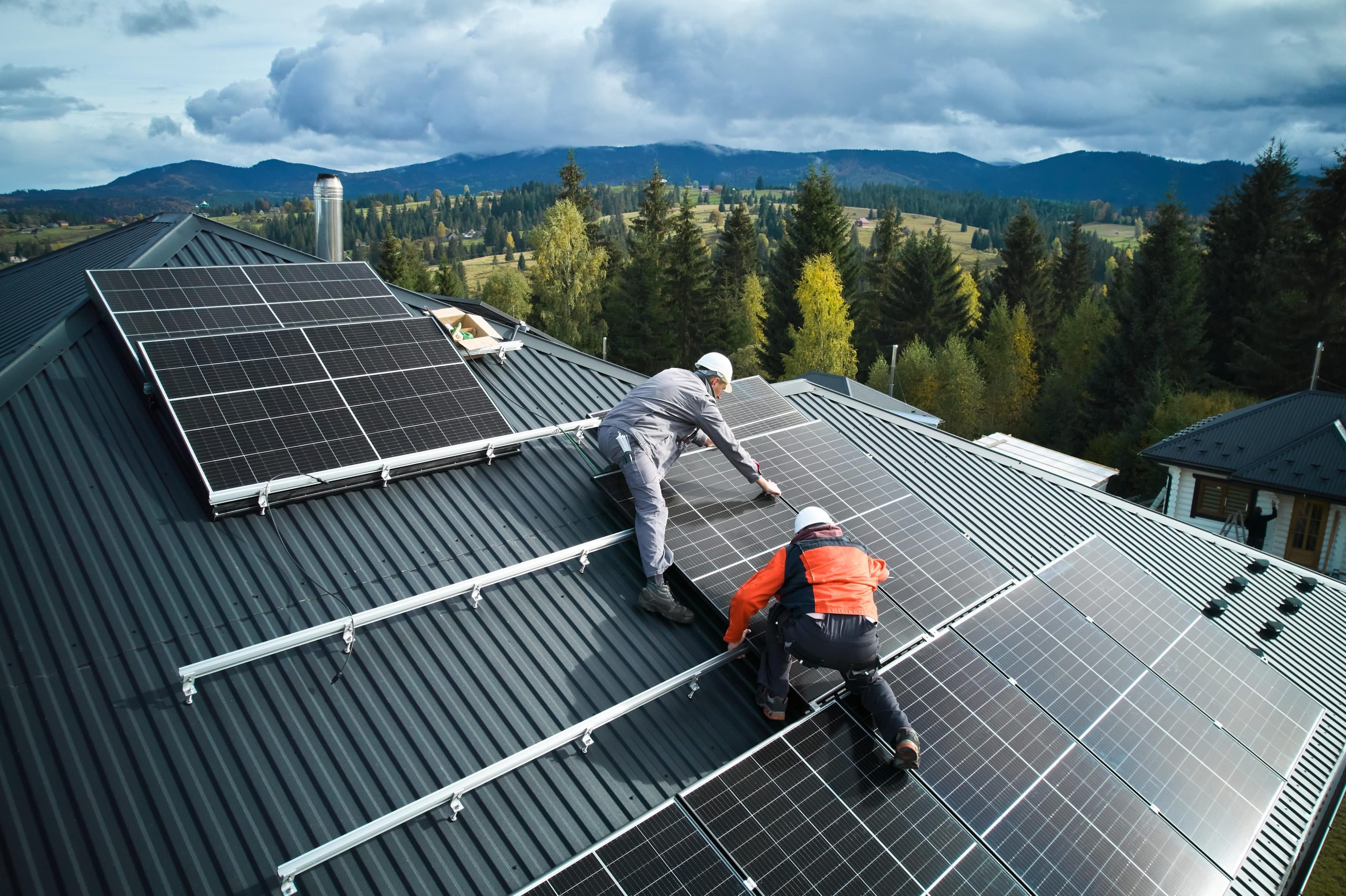
If you’re thinking about getting solar panels in Oxfordshire, it’s important to understand the permitted development rights. These rights allow you to install solar panels without needing planning permission, provided certain conditions are met. This can make the process simpler and more affordable when setting up your solar panel system.
Criteria for Permitted Development
To qualify under permitted development rights, a solar panel system must meet the following conditions:
- Ground-mounted solar panels must maintain a minimum 5-metre distance from property boundaries and cannot exceed a height of 4 metres.
- Solar panels on a flat roof must be at least 1 metre from the roof’s edge and they cannot exceed a height of 1 metre above the roof.
- The system must not negatively impact the aesthetic or structural integrity of the property or surrounding area.
As of December 21, 2023, the UK government extended permitted development rights to allow homeowners to install solar panels on flat roofs without the need for planning permission. This change aligns the regulations for flat roofs with those previously applicable to pitched roofs, simplifying the installation process for many homeowners.
Exceptions to Permitted Development
There are exceptions to these rights in certain cases:
- Conservation Areas and Article 2(3) Land: In designated areas such as conservation areas, National Parks, Areas of Outstanding Natural Beauty, and World Heritage Sites, installing solar panels on flat roofs may require prior approval from the local planning authority. This process allows the authority to assess the visual and environmental impact of the installation.
- Listed Buildings: If your property is a listed building, permitted development rights do not apply, and you will need to obtain both planning permission and listed building consent before installing solar panels. This ensures the preservation of the building’s historical and architectural significance.
Always check with your local authority to confirm whether your property falls under any of these exceptions. District councils deal with planning applications for residential buildings:
- Cherwell District Council
- Oxford City Council
- South Oxfordshire District Council
- Vale of White Horse District Council
- West Oxfordshire District Council
Some district councils, including South Oxfordshire District Council, can also advise whether you need planning permission, but this comes at a fee.
Ensuring compliance with planning regulations can save time and prevent costly complications during solar installation.
Application Process for Planning Permission for Solar Panels in Oxfordshire
If your solar panel installation does not fall under permitted development rights, you’ll need to apply for planning permission. Follow these steps:
- Gather the following documents to submit with your planning application: site plan, completed ownership certificate, scaled elevation drawings and supporting documents such as a design and access statement (if applicable) and heritage statement (if applicable).
- You can make an application via the Planning Portal website.
- Pay the required fee. Check the cost of your application on the Planning Portal website or use the fee calculator.
- Once your application is submitted, it usually takes 8-12 weeks for a decision.
- If your application is refused, you can appeal the decision through the Planning Inspectorate.
- Once approved, ensure compliance with any conditions specified in your planning permission and begin your solar panel installation.
Stay Connected with Upvolt
Get the latest updates on energy innovations, smart solutions, and exclusive offers.
Building Regulations and Other Considerations
There are several building regulations and additional considerations you must address to ensure your installation is safe, efficient, and compliant with local requirements.
Building Regulations for Solar Panels
- Your roof must be able to support the added weight of solar panels. If reinforcements are required, these must comply with Building Regulations.
- Flat roofs may need extra assessment to ensure the load is evenly distributed.
- All electrical installations must meet Part P of the Building Regulations to ensure safety and efficiency. The installer must be a certified electrician registered with a competent person scheme (e.g., NICEIC or NAPIT).
- Solar panels must be securely fixed to withstand wind loads and other weather conditions.
Other Considerations
- Properties located in conservation areas or listed buildings often face additional restrictions. You may need to provide a Heritage Statement to ensure your solar panels do not detract from the character of the property or its surroundings.
- If you plan to benefit from renewable energy incentives, such as the Smart Export Guarantee (SEG), your property must meet minimum EPC requirements (band D or higher).
- Inform your home insurer about your solar panel installation to ensure it is covered. This may include protection against accidental damage or theft.
- Oxfordshire residents may be eligible for government schemes or local grants supporting renewable energy installations, including the Home Upgrade Grant Phase 2.
In Summary
Installing solar panels in Oxfordshire is an excellent step toward reducing energy costs and embracing renewable energy. Understanding the planning permission requirements, permitted development rights, and building regulations ensures a smooth and compliant installation process.
By consulting your local district authority, preparing the necessary documentation, and addressing additional considerations such as insurance and maintenance, you can confidently proceed with your solar project.
Whether your property qualifies under permitted development or requires planning permission, taking the time to navigate the process will help you maximise the benefits of solar energy for your home or business.
About UpVolt
UpVolt delivers smart solar energy solutions tailored for your home. From design and installation to ongoing customer support, we provide end-to-end services for energy independence. With highly-trained engineers and top-quality devices, we ensure seamless service and intelligent energy optimisation through our Skygate® platform.
Get a free quote today to take the first step toward a climate-neutral home!
FAQ
Do I need planning permission to install solar panels in Oxfordshire?
In most cases, you do not need planning permission to install solar panels in Oxfordshire, as they are covered under permitted development rights. However, exceptions apply to listed buildings, conservation areas, and properties exceeding specific installation limits, such as panel height or placement.
What are the criteria for permitted development for solar panels in Oxfordshire?
In Oxfordshire, solar panels are typically permitted without planning permission under certain conditions. Ground-mounted panels must be at least 5 metre from property boundaries and no taller than 4 metres, while flat roof installations must be set back at least 1 metre from the roof’s edge and not exceed 1 metre in height. However, properties in conservation areas or listed buildings require permission.
How do I apply for planning permission for solar panels in Oxfordshire?
To apply for planning permission, you’ll need to submit a planning application via the Planning Portal website. Include all necessary documents, like plans and drawings. The council will then review it. This can take 8-12 weeks, depending on the application’s complexity.
Can I connect my solar panel system to the grid in Oxfordshire?
Yes, you can connect your solar panel system to the grid in Oxfordshire. To do so, you’ll need approval from your Distribution Network Operator (DNO), which manages the local electricity network. Most installers handle this application as part of the installation process. Once connected, you can benefit from schemes like the Smart Export Guarantee (SEG), allowing you to earn money by exporting unused electricity back to the grid.
What are the benefits of installing solar panels?
Installing solar panels provides numerous benefits, including reducing your energy bills and your carbon footprint. Solar energy is a renewable resource, and by utilising it, you contribute to energy efficiency and sustainability. There may also be financial incentives available for solar panel installation, such as the Energy Company Obligation (ECO4) scheme and the Home Upgrade Grant.

Alex Lomax
CEO & Co-Founder
Share article


Share article