-
Now live! Generate even more savings with our Skygate system. Click here to learn more.

On this page
- Benefits of Solar Panels for Buckinghamshire Homeowners
- Assessing Your Home's Suitability for Solar Panels
- Planning Permission and Building Regulations in Buckinghamshire
- The Installation Process
- Maintenance and Monitoring of Your Solar Panels
- Costs for Solar Panels in Buckinghamshire
- Financial Incentives and Support Schemes
- How to Choose a Reliable Solar Panel Installer in Buckinghamshire
- Let's Recap
- About UpVolt
- FAQ
Renewable Energy Hardware
10 mins read
Solar Panels in Buckinghamshire: Homeowner’s Ultimate Guide
13 Feb 2025Discover how solar panels in Buckinghamshire can lower energy bills, reduce carbon emissions, and boost property value. Learn about costs, installation, and incentives.
Take the first step toward energy independence today.
get a quote
On this page
- Benefits of Solar Panels for Buckinghamshire Homeowners
- Assessing Your Home's Suitability for Solar Panels
- Planning Permission and Building Regulations in Buckinghamshire
- The Installation Process
- Maintenance and Monitoring of Your Solar Panels
- Costs for Solar Panels in Buckinghamshire
- Financial Incentives and Support Schemes
- How to Choose a Reliable Solar Panel Installer in Buckinghamshire
- Let's Recap
- About UpVolt
- FAQ
Buckinghamshire homeowners are increasingly turning to solar panels as a practical way to lower energy bills and contribute to a greener, more sustainable future. With the UK Government's goal to reach net zero emissions by 2050 and a range of incentives to encourage renewable energy adoption, now is the ideal time to explore how solar panels can transform your Buckinghamshire home.

10 min read
On this page
- Benefits of Solar Panels for Buckinghamshire Homeowners
- Assessing Your Home’s Suitability for Solar Panels
- Planning Permission and Building Regulations in Buckinghamshire
- The Installation Process
- Maintenance and Monitoring of Your Solar Panels
- Costs for Solar Panels in Buckinghamshire
- Financial Incentives and Support Schemes
- How to Choose a Reliable Solar Panel Installer in Buckinghamshire
- Let’s Recap
- About UpVolt
- FAQ
In this article, we’ll cover the benefits of solar panels, how to assess your home’s suitability, planning permission requirements, the installation process, and how to choose a reliable solar panel installer in Buckinghamshire.
Key Takeaways
- Solar panels provide a sustainable solution to reduce energy bills, lower carbon emissions, and increase your property’s value.
- Government schemes like the Smart Export Guarantee (SEG) make solar panels a worthwhile investment.
- Regular maintenance ensures optimal solar panel performance, maximising energy savings and extending their lifespan.
- Choosing a reliable local installer ensures compliance with planning requirements and guarantees high-quality workmanship.
Benefits of Solar Panels for Buckinghamshire Homeowners
Solar panels provide Buckinghamshire homeowners with a range of advantages, from reducing energy costs to supporting a greener, more sustainable future. Here are some of the key benefits to consider.
Environmental Impact
Solar panels help reduce reliance on fossil fuels, which are a major contributor to climate change. By generating renewable energy, they lower carbon emissions and support the UK’s ambitious target of reaching net zero emissions by 2050. A typical home solar panel system can save around one tonne of carbon dioxide per year, which is equivalent to driving approximately 3,600 miles.
Energy Savings
Solar panels enable homeowners to generate their own electricity. A typical 3.5 kW system in the UK can save between £140 and £340 annually. With rising energy prices, these savings are likely to grow over time, offering even greater financial relief.
Potential for Additional Income
The Smart Export Guarantee (SEG) allows homeowners to sell surplus electricity back to the grid. Depending on the chosen tariff, SEG rates range from 3p to over 20p per kilowatt-hour (kWh). For example, exporting 1,000 to 1,500 kWh annually could earn homeowners up to £225 per year. This income further enhances the financial benefits of installing solar panels.
Increased Property Value
Homes with solar panels are attractive to environmentally conscious buyers. According to research by the Department for Business, Energy & Industrial Strategy (BEIS), properties with renewable energy systems can see their value increase by up to 25%, depending on the location and system quality.
Energy Independence
Installing solar panels reduces dependence on the national grid, offering greater control over energy usage. Pairing a solar panel system with a battery further enhances energy independence by storing excess electricity for use during the evening or on cloudy days. This setup can increase self-consumption rates from 20%-30% to over 70%, according to National Energy Action. 
Assessing Your Home’s Suitability for Solar Panels
Before investing in solar panels, you need to evaluate whether your Buckinghamshire property is suitable for solar panel installation. Key factors to consider include:
- Roof Orientation: South-facing roofs are optimal for capturing maximum sunlight throughout the day.
- Roof Size: Adequate roof space is required to install enough panels to meet your household’s energy needs.
- Structural Integrity: Your roof must be strong enough to support the weight of the solar panels. A professional installer can assess this for you.
- Shading and Sunlight Exposure: Minimise shading caused by nearby trees, buildings, or chimneys for optimal energy generation.
- Local Climate: Buckinghamshire’s moderate climate and ample daylight hours make it well-suited for solar energy systems.
Planning Permission and Building Regulations in Buckinghamshire
Planning permission and building regulations determine whether a solar panel installation can proceed without additional approvals in Buckinghamshire. In most cases, installations fall under permitted development rights, meaning no formal permission is required if the following conditions are met.
- Ground-mounted systems must be at least 5 metres from property boundaries and cannot exceed 4 metres in height.
- Flat roof installations must be positioned 1 metre from the roof’s edge and cannot extend more than 1 metre above the roof surface.
- Installations must not negatively affect the aesthetic appeal or structural integrity of the property or surrounding area.
However, if your property is a listed building or located within a conservation area, additional permissions are required:
- You must apply for planning permission and, in some cases, listed building consent.
- Evidence must demonstrate that the solar panels will not harm the building’s historical or architectural value.
For specific advice on planning permissions and regulations specific to your property, it is recommended to contact Buckinghamshire Council.
The Installation Process
The solar panel installation process involves several stages, all of which aim to optimise energy generation and ensure compliance with local regulations.
- Initial Consultation and Site Assessment: Installers visit the property to assess roof suitability, energy consumption, and potential solar output.
- System Design and Equipment Selection: Installers create a customised system using high-quality panels, inverters, and mounting systems to meet the homeowner’s energy needs.
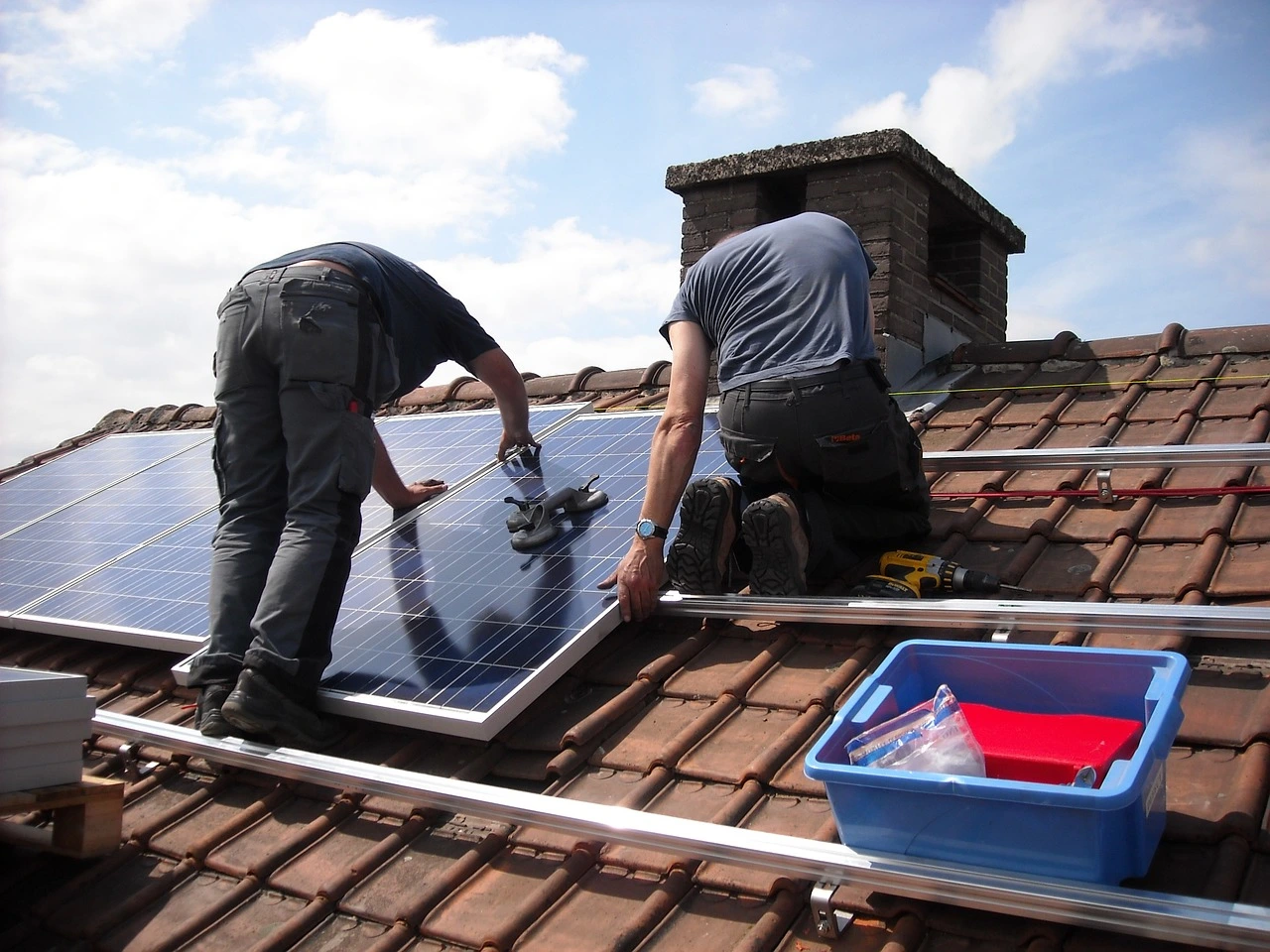
- Installation Timeline: The physical installation typically requires 2-3 days, including mounting the panels, connecting them to the electrical system, and testing to ensure functionality.
Maintenance and Monitoring of Your Solar Panels
Solar panels require minimal maintenance to remain efficient and operational. Regular checks can identify and resolve any issues early.
- Cleaning Panels: Dust and debris should be removed periodically to maintain sunlight absorption.
- Inspecting for Damage: Look for cracks, loose connections, or wear in the system.
- Monitoring Performance: Track energy output to ensure the system is working at optimal levels.
These simple steps can help extend the lifespan of your solar panels while maximising energy savings.
Costs for Solar Panels in Buckinghamshire
The cost of installing solar panels in Buckinghamshire typically ranges from £5,000 to £9,000 for an average 3-4 kW system. Factors influencing costs include:
- System Size: Larger systems generate more energy but cost more upfront.
- Panel Quality: High-efficiency panels tend to have a higher price but offer better performance.
- Roof Design: Complex roofs or difficult access can increase labour costs.
- Additional Features: Solar batteries, monitoring systems, and optimisers or microinverters increase the upfront investment.
The average payback period for solar panels is 8–12 years, with annual energy savings offsetting the initial investment.
Stay Connected with Upvolt
Get the latest updates on energy innovations, smart solutions, and exclusive offers.
Financial Incentives and Support Schemes
The UK Government and energy suppliers offer some financial incentives and support schemes to make solar panel installations more affordable for homeowners in Buckinghamshire.
Smart Export Guarantee (SEG)
The SEG allows homeowners to earn money by exporting surplus electricity back to the grid. Rates vary between 3p and over 20p per kilowatt-hour (kWh), depending on the energy supplier and tariff. For instance, E.ON Next Export Exclusive offers 16.5p per kWh for exported electricity. A typical 3.5 kW solar panel system can generate approximately 3,000 to 3,500 kWh annually, with homeowners exporting 1,000 to 1,500 kWh of excess energy. At a rate of 16.5p per kWh, this could provide an additional income of £165 to £247.50 per year.
ECO4 Scheme
The Energy Company Obligation (ECO4) scheme targets low-income households, offering financial assistance for energy-efficient home upgrades, including renewable technologies like solar panels. Eligibility is often tied to receiving certain benefits, and qualifying homeowners can save significantly on installation costs.
Home Upgrade Grant Phase 2 (HUG2)
The HUG2 initiative focuses on helping off-grid households transition to renewable energy solutions, such as solar panels and batteries. This grant can cover a significant portion of installation costs, making renewable energy accessible to those who might otherwise struggle to afford it.
VAT Relief
Solar panel installations are currently exempt from VAT under the government’s zero VAT rate for energy-saving technologies, introduced in 2022. This exemption applies to the entire installation cost, including labour and equipment, effectively reducing costs by 5% (VAT was 5% before being eliminated altogether under the zero VAT policy), which translates to savings of £250 to £450 for a system costing between £5,000 and £9,000.
How to Choose a Reliable Solar Panel Installer in Buckinghamshire
A trustworthy solar panel installer is essential to ensure a smooth installation process, adherence to local regulations, and optimal long-term performance of your system. Here are key steps to finding the right installer in Buckinghamshire:
Verify Credentials
Look for certifications such as the Microgeneration Certification Scheme (MCS), which ensures the installer adheres to industry standards for quality and safety. Additionally, check for memberships in reputable organisations like the Renewable Energy Consumer Code (RECC) or Solar Energy UK, as these affiliations reflect a commitment to high service standards and customer care.
Check Local Experience
Select an installer familiar with planning regulations, especially for properties in Buckinghamshire that may be listed buildings or in conservation areas. Local experience ensures the installer can navigate unique requirements and optimise your system for the region’s climate, which sees an average of 1,400 hours of sunshine annually, making solar panels a viable option.
Review Past Work and Reputation
Research the installer’s track record by reading customer reviews on platforms like Trustpilot, Google Reviews, or renewable energy forums. Look for consistent feedback about installation quality, professionalism, and after-sales service. A reputable installer should be willing to provide examples of completed projects in Buckinghamshire or references from satisfied customers.
Evaluate Warranties and After-Sales Support
Check that the installer offers comprehensive warranties for both the solar panels and the installation itself. Panel warranties typically last 20–25 years, while workmanship warranties should cover at least 5–10 years. Reliable after-sales support, including system maintenance and performance monitoring, is important for ensuring your solar panels operate efficiently over their lifespan.
Compare Quotes and Services
Request detailed quotes from multiple installers, ensuring they include a breakdown of costs, expected energy generation, and timelines. Compare the quality of the components, such as inverters and panels, and check whether advanced features like energy optimisation tools or solar batteries are included. While price is important, prioritise value and service quality over the lowest cost.
Assess Energy Monitoring and Customisation Options
Ask about energy monitoring systems that allow you to track your system’s performance in real-time. Modern platforms provide insights into energy generation and consumption, helping you optimise savings. Ensure the installer customises the system design to meet your specific energy needs, roof structure, and future goals, such as adding battery storage.
Let’s Recap
Solar panels represent a smart, sustainable investment for Buckinghamshire homeowners. They lower energy costs, reduce carbon emissions, and support the UK’s net-zero targets. Assessing your home’s suitability, choosing an experienced installer, and maintaining your system ensures long-term benefits.
About UpVolt
UpVolt delivers bespoke solar energy solutions for Buckinghamshire homes. Expert engineers design and install systems tailored to the region’s unique needs, optimising energy output and ensuring long-term reliability. Contact UpVolt today for a free quote and take the first step toward energy independence and sustainability in Buckinghamshire.
FAQ
Do I need planning permission for solar panels in Buckinghamshire?
Most solar panel installations in Buckinghamshire fall under permitted development rights, so planning permission is not required. However, listed buildings and properties in conservation areas will need permission.
How much do solar panels cost in Buckinghamshire?
The cost of solar panels ranges from £5,000 to £9,000 for a typical 3-4 kW system, depending on system size, panel quality, and roof complexity.
What financial incentives are available for Buckinghamshire homeowners?
Government schemes like the Smart Export Guarantee (SEG) allow homeowners to earn money by exporting surplus electricity. The ECO4 scheme and VAT relief further reduce costs for eligible households.
How long do solar panels take to install?
Most installations are completed in 2-3 days. This includes mounting panels, connecting them to the electrical system, and testing for functionality.
What maintenance do solar panels need?
Solar panels require minimal maintenance. Regular cleaning, inspecting for damage, and monitoring system performance ensure they continue operating efficiently for years.

Alex Lomax
CEO & Co-Founder
Share article


Share article