-
Now live! Generate even more savings with our Skygate system. Click here to learn more.

On this page
- Why Hertfordshire Farms and Estates Are Switching to Solar
- Solar Installation Types Suitable for Rural Properties
- Financial Benefits for Agricultural and Residential Estates
- Grants, Schemes, and Group Buying Options in Hertfordshire
- Planning and Land Use Considerations for Rural Solar Projects
- Solar for Diverse Estate Needs: Practical Applications
- Why Solar Adoption Is Growing on Hertfordshire Farms
- About Upvolt
- Frequently Asked Questions About Solar for Farms and Estates
Solar Photovoltaic
10 mins read
Solar Solutions for Farms and Estates in Hertfordshire
27 May 2025Solar adoption is accelerating across Hertfordshire's farms and estates, driven by rising energy costs, land-use flexibility, and pressure to meet sustainability benchmarks. For many rural operators, it's becoming a core part of long-term strategy rather than a future ambition.
Take the first step toward energy independence today.
get a quote
On this page
- Why Hertfordshire Farms and Estates Are Switching to Solar
- Solar Installation Types Suitable for Rural Properties
- Financial Benefits for Agricultural and Residential Estates
- Grants, Schemes, and Group Buying Options in Hertfordshire
- Planning and Land Use Considerations for Rural Solar Projects
- Solar for Diverse Estate Needs: Practical Applications
- Why Solar Adoption Is Growing on Hertfordshire Farms
- About Upvolt
- Frequently Asked Questions About Solar for Farms and Estates
Farms and large estates in Hertfordshire are facing a crossroads: with energy prices climbing, agricultural margins tightening, and pressure mounting to reduce carbon emissions, landowners are increasingly turning to solar energy for relief, resilience, and long-term sustainability. This guide explores the most effective solar options for farms and estates in Hertfordshire, including installation types, financial benefits, planning considerations, and trusted local providers.

10 min read
On this page
- Why Hertfordshire Farms and Estates Are Switching to Solar
- Solar Installation Types Suitable for Rural Properties
- Financial Benefits for Agricultural and Residential Estates
- Grants, Schemes, and Group Buying Options in Hertfordshire
- Planning and Land Use Considerations for Rural Solar Projects
- Solar for Diverse Estate Needs: Practical Applications
- Why Solar Adoption Is Growing on Hertfordshire Farms
- About Upvolt
- Frequently Asked Questions About Solar for Farms and Estates
Everything You Need to Know in Brief
- Solar installations help Hertfordshire farms and estates cut operational costs, stabilise energy use, and reduce carbon impact.
- Rooftop systems on barns or farm buildings often qualify under Permitted Development Rights, while ground-mounted arrays may need full planning consent.
- Local councils like East Herts and St Albans enforce stricter rules for listed properties and conservation areas—Article 4 Directions may apply.
- Financial incentives include the Annual Investment Allowance (AIA), Smart Export Guarantee (SEG), and council-backed programs like Solar Together.
- Upvolt supports rural solar success across Hertfordshire—offering site analysis, planning support, installation, and real-time tracking with Skygate®.
Why Hertfordshire Farms and Estates Are Switching to Solar
Rural properties face unique pressures: high daytime electricity usage, tighter operating margins, and increasing environmental expectations. Solar is emerging as a highly practical solution for farms and estates looking to control costs, stabilise operations, and align with long-term sustainability goals.
Managing Rising Energy Costs Through On-Site Generation
Agricultural operations are heavily reliant on electricity—from refrigeration units and irrigation systems to milking equipment and grain drying. As electricity tariffs soar, on-site solar generation offers an opportunity to take control of energy costs, reduce dependence on the grid, and stabilise long-term operational expenses.
Many Hertfordshire farmers are installing solar systems not just for savings but to create energy price certainty across unpredictable seasons and fluctuating energy markets.
Environmental Responsibility and Net-Zero Farm Goals
Farms and rural estates are also key players in the UK’s net-zero ambition. Commercial solar installations can help estates reduce their carbon footprint by several tonnes per year, depending on system size and usage.
For estates with Environmental Stewardship or Countryside Stewardship schemes, solar complements other sustainability initiatives—improving a farm’s public image, tenant appeal, and eligibility for future green funding.
Solar Installation Types Suitable for Rural Properties
Not all rural solar installations are the same. The ideal system depends on your land availability, infrastructure, and energy usage. From ground-mounted arrays in open fields to rooftop systems on barns and hybrid setups for off-grid buildings, rural estates have more flexibility than urban counterparts.
Ground-Mounted Systems for Large Fields and Farmland
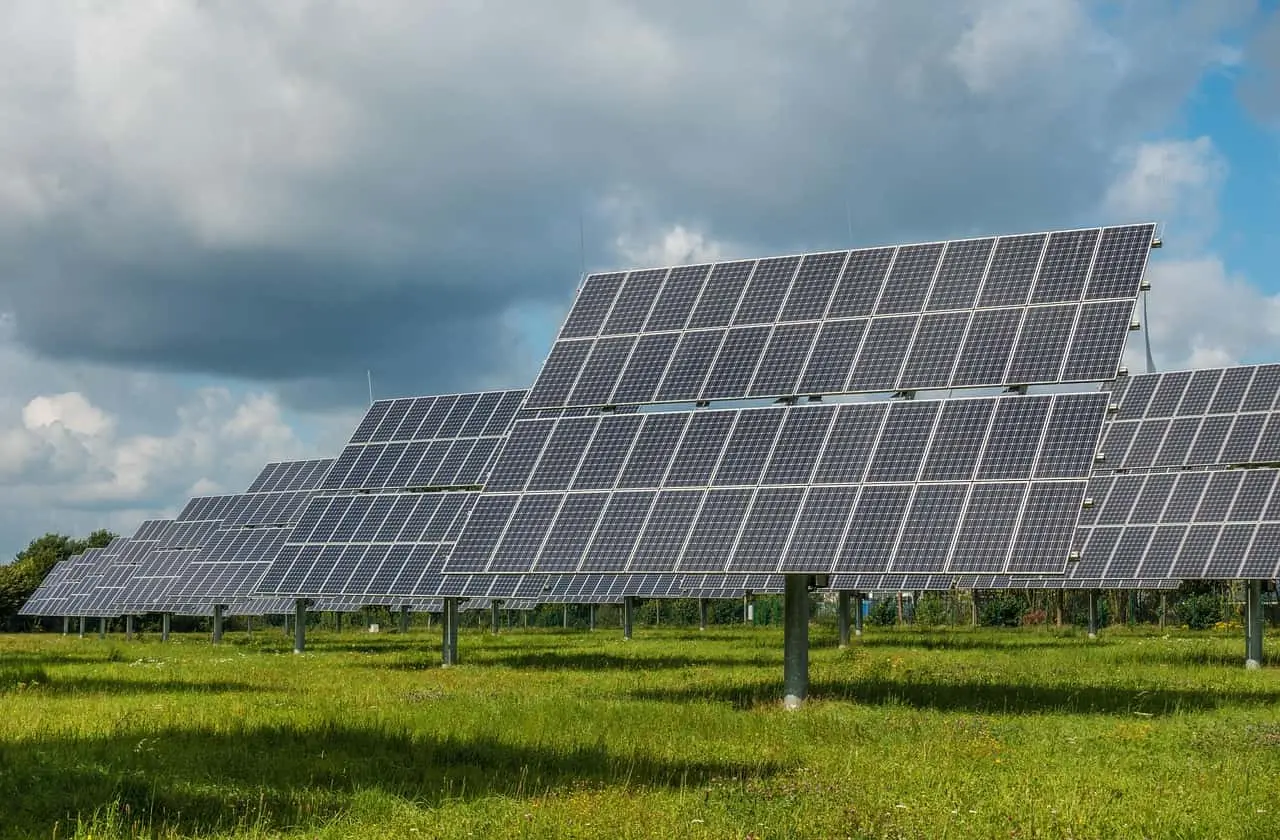
Rural properties have the distinct advantage of space—making them perfect candidates for ground-mounted solar arrays. These installations:
- Require no structural mounting
- Can be oriented for maximum solar gain
- Can cover larger capacities (50kW to 1MW+)
They’re ideal for powering energy-intensive operations or feeding into local energy grids under the Smart Export Guarantee (SEG).
Rooftop Solar for Barns, Sheds, and Farm Offices
Large barn and shed roofs offer excellent platforms for rooftop solar arrays, often without the need for planning permission. These installations:
- Make use of underutilised space
- Protect roof surfaces from UV degradation
- Power on-site equipment directly
With the right inverter and system design, barns can provide 3-phase power for agricultural machines or feed stored power to residential buildings on the estate.
Off-Grid and Hybrid Systems for Remote Estates
For remote properties or those with weak grid connections, off-grid or hybrid solar systems offer complete autonomy. These include:
- Solar panels with battery banks
- Optional diesel generator integration
- Load management tools to optimise usage
Such setups are especially valuable for rural buildings disconnected from mainline electricity or where grid upgrades are prohibitively expensive.
Financial Benefits for Agricultural and Residential Estates
Beyond energy savings, solar systems offer significant financial upside for rural businesses and landowners. Tax incentives, income through grid exports, and long-term operational cost reductions make solar not only a sustainability move—but a sound financial strategy for estates.
Annual Investment Allowance (AIA) and ROI Expectations
Solar equipment qualifies for the Annual Investment Allowance (AIA), which allows farms and rural businesses to deduct 100% of the installation cost from taxable profits in the same year. This creates substantial savings on corporation or income tax.
Combined with rising electricity rates and SEG payments, many rural solar systems now achieve an ROI within 4 to 6 years, depending on size and usage. After that, the system continues to deliver free or low-cost energy for 20+ years.
SEG Payments and Long-Term Operational Savings
The Smart Export Guarantee (SEG) enables landowners to earn revenue by exporting unused energy to the grid. Rates range from 4p to 15p per kWh, depending on the energy provider.
This additional income stream—paired with long-term bill savings—makes solar particularly attractive for diversified estates with variable energy loads.
Grants, Schemes, and Group Buying Options in Hertfordshire
Adopting solar on rural properties can come with high upfront costs—but Hertfordshire councils and national programs are working to lower those barriers. From group-buying initiatives to grant funding and pilot partnerships, landowners now have multiple support options to reduce installation costs and speed up adoption.
Solar Together: Group-Buying Initiative Backed by Local Councils
Hertfordshire County Council collaborates with iChoosr to offer the Solar Together scheme—an initiative that pools homeowner and small estate interest to negotiate discounted solar prices.
Benefits include:
- Access to pre-vetted MCS-certified installers
- Reduced rates through bulk procurement
- Optional battery storage and EV charger add-ons
This program opens periodically and has helped hundreds of rural homes and small farms adopt solar more affordably.
UKSPF and Local Grant Support for Farms and Estates
Under the UK Shared Prosperity Fund (UKSPF), Hertfordshire farms may be eligible for clean energy grants, particularly for sustainability upgrades. Amounts can range from £2,500 to £10,000, depending on impact and eligibility.
Local boroughs (e.g. North Herts, Dacorum, East Herts) may also offer agricultural innovation grants, especially for projects aligned with energy efficiency, food security, or biodiversity outcomes.
Hertfordshire Council Partnerships with iChoosr and Others
In addition to Solar Together, several councils in Hertfordshire have run clean growth initiatives with organisations like the LEP (Local Enterprise Partnership) or CPRE (Campaign to Protect Rural England), which can co-fund feasibility studies or pilot projects for renewable installations.
Planning and Land Use Considerations for Rural Solar Projects
Before moving forward with a solar installation—especially ground-mounted or large-scale systems—rural estates must consider planning regulations , land classifications, and local environmental expectations. Understanding what the council expects can improve approval chances and ensure the project aligns with land use goals.
Planning Regulations for Solar Farms Over 50kW
While most rooftop and small-scale systems fall under Permitted Development Rights, solar farms above 50kW usually require full planning permission. Key considerations include:
- Impact on landscape views
- Proximity to heritage or conservation areas
- Community consultation and grid access
Applications must go through the local planning authority, often with input from environmental and landscape officers.
Preferred Land Types: Brownfields, Agricultural, Industrial
For ground-mounted arrays or solar farms, local councils favour installations on:
- Brownfield sites
- Low-grade agricultural land
- Industrial or utility-adjacent land
Using prime farmland for solar can meet resistance unless it’s part of a dual-use system (e.g. grazing sheep beneath raised panels).
Dual-Purpose Installations (e.g. Grazing and Energy Generation)
Innovative farms in Hertfordshire are combining solar with agriculture—allowing livestock to graze beneath raised solar panels, or planting wildflowers between rows to encourage pollinators. These setups:
- Improve land-use efficiency
- Enhance biodiversity
- Strengthen planning approval prospects
They’re especially useful on mixed-use estates where aesthetics and land output must be balanced.
Biodiversity Net Gain and Local Environmental Concerns
Planning policy now encourages Biodiversity Net Gain (BNG)—meaning solar farms must demonstrate they won’t just preserve nature but enhance it. Proposals often include:
- Native planting
- Wildlife corridors
- Sustainable drainage
Working with local groups like CPRE Hertfordshire and Wildlife Trusts can help build community support and satisfy planning requirements.
Community Groups (e.g. CPRE Hertfordshire) and Public Input
Community and stakeholder support can be key for large-scale or highly visible rural installations. Engaging early with groups such as:
- CPRE Hertfordshire
- Local parish councils
- Neighbouring landowners
can smooth planning routes and build positive PR around the project.
Solar for Diverse Estate Needs: Practical Applications
No two estates are the same. Some are centered on intensive agriculture, while others may operate residential rentals, cafés, or small shops. The right solar solution should match your energy usage profile and infrastructure, whether you’re seeking load stability, energy independence, or better cost control.
Dairy and Poultry Operations with High Energy Loads
Dairy farms with milking parlours, refrigeration, and feed mixers benefit from daytime solar generation that directly offsets peak operational costs.
Poultry farms with climate control systems and automated feeders can also reduce bills. and the Department for Energy Security and Net Zero recognises agriculture as a priority sector for renewable adoption.
Mixed-Use Estates with Residential and Commercial Outlets
Larger estates may include holiday cottages, cafés, or farm shops, each with their own energy profiles. A well-designed solar system can:
- Serve multiple buildings through sub-metering
- Offset usage across diverse tenants
- Lower communal area costs
While estate-specific data is lacking, the UK’s broader Clean Power 2030 Action Plan outlines the national shift toward distributed generation across rural and urban properties alike.
Estate-Level Energy Independence and Monitoring Tools
For remote or semi-connected estates, achieving energy independence is increasingly possible with:
- Large-scale solar
- Battery storage (e.g. Tesla Powerwall, GivEnergy)
- Smart load control for peak shaving
Online dashboards and mobile apps give estate managers real-time insights into usage patterns, solar output, and system health.
Why Solar Adoption Is Growing on Hertfordshire Farms
From commercial rooftops in Watford to barns and fields across rural Hertfordshire, solar energy is delivering real savings and long-term stability. Whether you’re powering offices, workshops, dairy parlours, or multi-use estates, solar is no longer a luxury — it’s a strategic asset.
With rising energy costs, ongoing grid uncertainty, and growing pressure to meet long-term sustainability targets, the most forward-looking businesses and landowners in Hertfordshire are investing in solar to reduce operational overheads, achieve greater energy independence, and demonstrate stronger ESG performance.
Upvolt helps you make it happen — efficiently and confidently. Our Skygate® platform simplifies everything: site analysis, grant access, council permissions, installer selection, and PPA structuring. Whether you’re managing a logistics site or a remote estate, we tailor solutions that work for your land, your operations, and your future.
About Upvolt
Upvolt provides tailored solar energy systems for farms and rural estates across Hertfordshire. From ground-mounted arrays to barn rooftop installations, we manage the full project lifecycle—including site assessments, planning support, installer selection, and compliance.
Our Skygate® platform gives estate managers real-time system monitoring, grant tracking, and export performance insights, helping you maximise return and maintain operational control.
Get your free quote today and take the first step toward a cleaner, more energy-efficient future.
Frequently Asked Questions About Solar for Farms and Estates
Are there solar grants available specifically for farms in Hertfordshire?
Yes. Farms may qualify for UKSPF energy grants, LEP sustainability funding, and Solar Together discounts. Eligibility depends on your system size, location, and council programs.
Do I need planning permission for solar on agricultural land?
You’ll need permission for systems over 50kW or those that impact the landscape. Smaller rooftop or ground-mounted setups often qualify as Permitted Development, especially outside conservation zones.
What are dual-purpose solar farms and how do they work?
These combine energy generation with land use—like grazing sheep under panels or planting wildflowers to support biodiversity. They boost land efficiency and help with planning approval.
Who are the best solar companies for rural properties in Hertfordshire?
Trusted names include ProStar Energy, EV Solar & Battery Storage, Energy My Way, and Better Planet (UK). Just make sure your installer is MCS-certified and experienced with rural sites.
How do group-buying schemes like Solar Together work?
It’s a council-backed group-buying scheme. You register interest, get a quote from vetted installers, and access lower prices through bulk buying. The process includes registration, offer review, and scheduled installation.

Alex Lomax
CEO & Co-Founder
Share article


Share article