-
Now live! Generate even more savings with our Skygate system. Click here to learn more.

On this page
- What Is the Warm Homes Plan?
- Why UK Homes Are Central to Future Energy Policy
- What Technologies the Warm Homes Plan Is Expected to Support
- Warm Homes Plan vs Zero-Bill Homes: What Is the Difference?
- What the Warm Homes Plan Does Not Guarantee
- What UK Homeowners Should Do Before Any Warm Homes Announcement
- How This Guide Will Be Updated as the Warm Homes Plan Develops
- How Upvolt Helps Homeowners Prepare for Policy-Driven Change
- About Upvolt
- FAQ
Warm Homes Plan
21 mins read
The Warm Homes Plan Explained for UK Homeowners
24 Jan 2026A homeowner's guide to the UK Warm Homes Plan and energy upgrades.
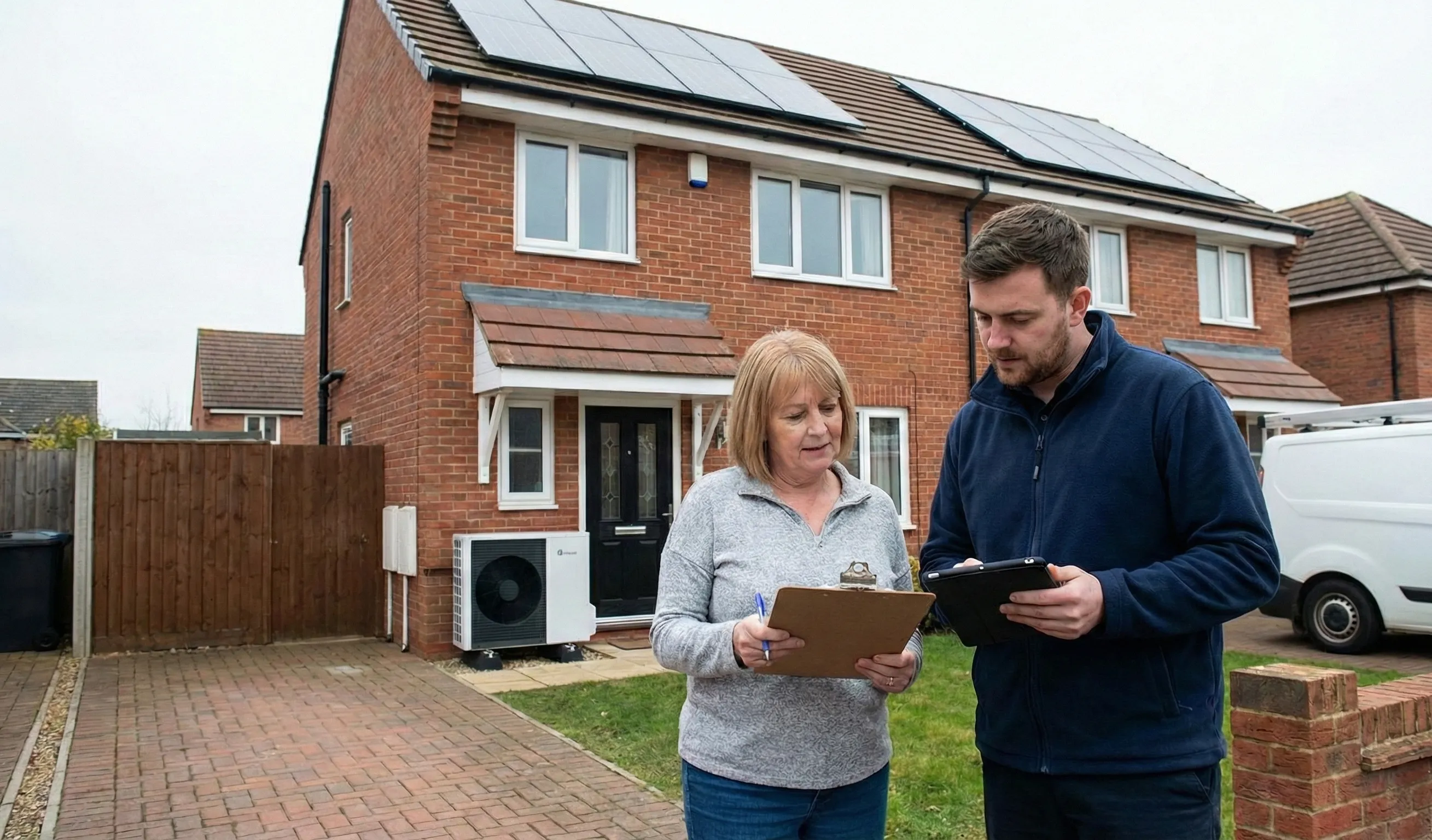
Take the first step toward energy independence today.
get a quote
On this page
- What Is the Warm Homes Plan?
- Why UK Homes Are Central to Future Energy Policy
- What Technologies the Warm Homes Plan Is Expected to Support
- Warm Homes Plan vs Zero-Bill Homes: What Is the Difference?
- What the Warm Homes Plan Does Not Guarantee
- What UK Homeowners Should Do Before Any Warm Homes Announcement
- How This Guide Will Be Updated as the Warm Homes Plan Develops
- How Upvolt Helps Homeowners Prepare for Policy-Driven Change
- About Upvolt
- FAQ
The Warm Homes Plan has raised important questions about whether UK homes are ready for the shift to low-carbon living. With rising bills, grid strain, and climate targets accelerating policy change, homeowners need clarity about what their home can realistically support.
This guide explains what the Warm Homes Plan includes, who may qualify, and what steps you can take now to future-proof your home and access potential savings.

21 min read
On this page
- What Is the Warm Homes Plan?
- Why UK Homes Are Central to Future Energy Policy
- What Technologies the Warm Homes Plan Is Expected to Support
- Warm Homes Plan vs Zero-Bill Homes: What Is the Difference?
- What the Warm Homes Plan Does Not Guarantee
- What UK Homeowners Should Do Before Any Warm Homes Announcement
- How This Guide Will Be Updated as the Warm Homes Plan Develops
- How Upvolt Helps Homeowners Prepare for Policy-Driven Change
- About Upvolt
- FAQ
Key Takeaways
- The Warm Homes Plan is now a published government strategy to cut energy bills and upgrade homes through a mix of funding routes and delivery partners.
- Support is expected to include fully funded upgrades for lower-income households, alongside options that make it easier for other homeowners to improve efficiency over time.
- The biggest long-term savings typically come from starting with insulation and heat-loss reduction, then layering in clean heating and electricity upgrades based on your home’s suitability.
- Even if you don’t qualify for full funding, you can still benefit by getting a home assessment now and planning upgrades in phases.
What Is the Warm Homes Plan?
The Warm Homes Plan is a major UK government initiative aimed at upgrading millions of homes to be warmer, more efficient, and less reliant on fossil fuels. It aims to reduce energy bills, cut carbon emissions, and help households transition to low-carbon heating and energy systems.
The Plan brings together different programmes and policy levers to improve home comfort, reduce fuel poverty, and accelerate the shift toward low-carbon heating and cleaner electricity use. It’s positioned as a long-term national upgrade programme rather than a one-off grant announcement.
Who Is Proposing the Warm Homes Plan
The Warm Homes Plan has been published by the UK government through the Department for Energy Security and Net Zero (DESNZ). Its delivery is expected to involve a mix of national bodies, local authorities, and sector partners who can coordinate upgrades at scale.
It builds on the government’s net-zero commitments and aims to lift over 1 million households out of fuel poverty by 2030.
What Problems the Warm Homes Plan Aims to Solve
The initiative targets multiple challenges in UK housing:
- Lowering energy bills for households at risk of fuel poverty
- Improving energy efficiency through insulation, heating upgrades, and solar
- Reducing carbon emissions from domestic heating and electricity use
- Upgrading ageing homes to meet net-zero standards and modern comfort
Is the Warm Homes Plan Official Policy Yet?
Yes. The Warm Homes Plan has now been published as a government strategy for upgrading homes and cutting energy bills.
However, the plan itself works more like an umbrella roadmap than a single scheme with one application form. What support you can access, and how quickly, will depend on how individual measures are rolled out, and what’s available through national and local delivery routes.
What this means for homeowners:
If you’re waiting for a single “go-live date,” you may miss early opportunities. It’s better to get your home assessed now and build a phased plan you can adapt as new details land.
Why the Warm Homes Plan Is Being Discussed Now
Several trends have made this plan a policy priority:
- Rising energy bills and grid volatility
- National climate targets and net-zero timelines
- Increased public support for low-carbon home upgrades
- The need to address poor energy efficiency in older UK housing stock
What’s New in the Warm Homes Plan (and Why It’s Different)
Previous home upgrade schemes often struggled with inconsistent delivery, uneven quality, and confusing eligibility. One of the most important signals in the Warm Homes Plan is that the government is positioning this as a long-term programme with more coordinated delivery, and not a short-term incentive spike.
The Plan also reflects a stronger shift toward electric home upgrades, where households can reduce reliance on fossil fuels by improving insulation and adopting cleaner heating and energy technologies over time.
What You Could Receive Through the Plan
Depending on your situation, the Warm Homes Plan is expected to support a mix of upgrades such as:
- insulation improvements (loft, wall, floor – depending on your home)
- low-carbon heating upgrades (where your home is suitable)
- solar and energy storage measures (especially where they reduce bills quickly)
- smarter heating controls to reduce waste and improve comfort
Some households may be eligible for fully funded upgrades, while others may access support through different routes (including finance options or partial contributions), depending on the final delivery design.
Who’s Eligible for the Warm Homes Plan?
Eligibility won’t be identical for every part of the Warm Homes Plan, because it brings together multiple routes to support household upgrades.
In practice, support is expected to fall into two broad tracks:
1. Fully Funded Upgrades (Priority Support)
These are aimed at households most at risk of high bills and poor home efficiency, with an emphasis on upgrades that improve comfort and reduce energy costs quickly.
2. Wider Access Routes (For Other Homeowners)
If you’re not eligible for full funding, the Plan’s direction still matters. It signals where the UK’s housing standards and incentives are going over the next several years.
Quick check: If your home is hard to heat, has older insulation, or relies on gas heating, you’re exactly the kind of property the Plan is designed to improve. This is true even if the support route differs.
Why It Matters for Zero-Bill Homes
The Warm Homes Plan doesn’t promise “zero bills”, or exactly how to create a zero-bill home setup. However, it does support many of the upgrades that make ultra-low-bill living possible, especially when done in the right order.
Why UK Homes Are Central to Future Energy Policy
As the UK pushes toward net-zero emissions, homes are emerging as a critical part of the solution. Energy efficiency is now a national priority. Understanding the role of domestic energy use helps explain why policy is shifting from power stations to front doors.
Why Household Energy Bills Are Rising
Rising energy bills are being driven by a mix of global and domestic pressures. Key factors include:
- Volatile international gas prices
- An ageing energy grid that’s costly to maintain
- A lack of large-scale domestic energy production
- Increased network demand from electric heating and vehicles
These issues are making it more expensive to power homes, especially those that aren’t energy efficient.
Why UK Homes Lag Behind on Efficiency
The UK has some of the least efficient housing stock in Europe. On average, UK homes carry a D rating on the Energy Performance Certificate (EPC) scale, a sign of poor insulation, outdated heating systems, and significant heat loss. This inefficiency isn’t just a comfort issue; it’s a major obstacle to the country’s net-zero targets.
Unlike countries such as Sweden, where better building standards and retrofitting efforts have led to a more efficient housing stock. The UK’s older homes often require extensive upgrades before they can support modern technologies like heat pumps or solar panels. These properties demand a higher level of intervention, making domestic retrofits a key priority in UK energy policy.
How Electrification of Heating and Transport Impacts the Grid
Electric heat pumps, EV chargers, and home batteries are reshaping energy demand. But they also place new pressure on the grid, especially during winter peaks or evening hours. Without smarter home systems and better insulation, electrification can create bottlenecks instead of benefits.
Why Energy Policy Now Starts at Home
UK energy policy is placing greater emphasis on the household. Instead of focusing only on building new power plants, the government is prioritising upgrades to existing homes.
Improving insulation, heating systems, and overall energy efficiency across the country is often more cost-effective than expanding generation capacity. It also cuts emissions and reduces bills where the impact is most immediate.
For homeowners, this shift highlights the importance of future-proofing your home from energy price increases. By making your property more efficient, you are not only reducing your own costs but also contributing to a more resilient and sustainable national energy system.
With that context in mind, here are the upgrades and technologies the Warm Homes Plan is expected to prioritise, and what they actually mean for homeowners.
What Technologies the Warm Homes Plan Is Expected to Support
The Warm Homes Plan is expected to support a coordinated shift toward renewable, low-carbon energy systems. Instead of focusing on standalone upgrades, it aims to help UK households combine technologies like solar, heat pumps, and battery storage to reduce bills, improve efficiency, and cut emissions.
How Solar Panels Are Expected to Reduce Household Energy Costs
Solar panels can reduce your household electricity costs by helping you generate more of your power during daylight hours. They’re especially useful if you’re home during the day, run appliances like washing machines regularly, or plan to add other electric upgrades in future.
For many households, solar delivers the biggest benefit when it’s paired with a plan for when you use energy, not just how much you generate. That’s why grid tariffs, usage habits, and home efficiency matter just as much as the hardware.
These benefits grow when solar is combined with battery storage and flexible energy tariffs. By storing excess solar energy and using it during peak hours, households can reach closer to zero energy bills while reducing reliance on the grid.
Why Heat Pumps Are a Core Part of the Warm Homes Plan
Heat pumps are a core part of the UK’s long-term shift away from gas heating because they can deliver efficient heating when your home is prepared for them. The biggest performance gains typically come when a heat pump is installed alongside good insulation and properly sized radiators or underfloor heating.
- Households can save around £385 per year compared to old heating systems
- UK and global-level emissions of CO2 can drop significantly
- Grants like the Boiler Upgrade Scheme offer up to £7,500 toward installation
To work effectively, heat pumps require well-insulated homes, which is why home readiness is such a key focus of the plan.
Practical takeaway: If your home loses heat quickly, a heat pump can still work. However, the comfort and cost outcomes depend heavily on home readiness and system design.
What Role Home Battery Storage Plays in Reducing Grid Dependence
Battery storage systems allow homes to store excess solar energy for use later in the day, especially during peak electricity hours. This reduces reliance on the grid and improves self-consumption.
- Time-of-use tariffs can boost savings further when charging and discharging is optimised
- Homes with electric vehicles or high evening use benefit most from battery integration
Battery systems also provide energy resilience during outages and future-proof homes as grid dynamics evolve.
Why Technology Integration Matters More Than Individual Upgrades
While each technology has benefits on its own, the greatest impact comes when they work together. Solar panels, battery storage, and heat pumps form the foundation of a zero-bill or ultra-low-bill home when integrated as a coordinated system.
- Integrated systems reduce both carbon emissions and long-term energy costs
- Smart controls allow different technologies to respond to pricing, weather, and household usage
- Bundled upgrades may unlock additional funding under future government schemes
Upvolt’s Skygate® platform helps households get more from their energy systems by coordinating generation, storage, and usage based on real-time data. This approach ensures your technologies work together efficiently and supports better savings over time.
The Warm Homes Plan is expected to favour this kind of whole-home upgrade strategy over piecemeal improvements.
Get the latest updates on energy innovations, smart solutions, and exclusive offers.
Stay Connected with Upvolt
Warm Homes Plan vs Zero-Bill Homes: What Is the Difference?
There’s growing interest in zero-bill homes across the UK, but it’s important to separate long-term vision from what’s currently supported by government policy.
While the Warm Homes Plan focuses on improving household efficiency and affordability, it does not guarantee completely eliminating energy bills.
Where the Idea of a “Zero-Bill Home” Comes From
The concept of a zero-bill home emerged from efforts to rethink how energy is produced and consumed at the domestic level. It’s based on the idea that with enough on-site generation and storage, a home could offset its entire energy demand over the year.
What the Warm Homes Plan Actually Delivers
The Warm Homes Plan is not a promise of zero bills. It is designed to improve housing quality and cut energy waste, especially for low-income households, through targeted support and partial funding.
| Focus Area | What the Plan Offers |
| Solar Panels | Contribution toward installation |
| Heat Pumps | Grants through the Boiler Upgrade Scheme |
| Energy Efficiency | Surveys and recommended upgrades |
Why Zero Energy Bills Aren’t Guaranteed
Achieving ultra-low or zero energy bills depends on more than just installing new tech. Factors like your property’s insulation, roof size, and energy usage habits all affect the outcome. Even with grants, older homes or high-consumption households may still rely on some grid power.
Why Realistic Expectations Protect Homeowners
The Warm Homes Plan can help lower energy bills, but it won’t eliminate them for everyone. That’s why it’s critical to assess what your home can realistically achieve. Long-term savings come from smart planning, not assumptions.
A tailored system based on your property’s readiness gives you the best chance of reaching low-bill or near-zero-bill performance without overpromising.
What the Warm Homes Plan Does Not Guarantee
The Warm Homes Plan offers meaningful support, but it does not deliver the same outcomes for every home. Understanding what the plan can and cannot do is important before committing to major energy upgrades.
Zero Energy Bills Are Not Guaranteed
The goal of the Warm Homes Plan is to reduce your energy usage, not to eliminate your energy bills entirely. The actual savings you see will depend on several factors:
- How much energy your household uses and when
- The efficiency and design of your current systems
- How well your home retains heat
- Seasonal demand and your local climate
- The quality and compatibility of the upgrades installed
Even the best systems cannot fully offset high usage in an inefficient property.
Winter Bills Will Still Exist
UK winters bring increased heating needs and limited sunlight. Even with solar panels and a heat pump, most homes will still draw some energy from the grid during colder months. Reduced solar generation in winter, combined with longer heating hours, means your system is unlikely to produce enough to cover your entire demand.
Battery storage can help shift solar energy into evening hours, but it cannot solve the seasonal gap on its own. A well-insulated home with the right system design will see lower bills, but winter costs are still a reality for most households.
Not Every Home Is Suitable for Every Technology
Some homes are not yet ready to support solar, batteries, or heat pumps. Common limitations include:
- Roofs that are too small or poorly oriented for solar panels
- Insufficient insulation that lowers heat pump performance
- Lack of space for battery storage or external heat pump units
- Electrical systems that require upgrades before installation
These barriers do not rule out upgrades entirely, but they may increase upfront costs or delay the installation process.
Your Home’s Design Shapes What’s Possible
No two homes will benefit from the Warm Homes Plan in the same way. A semi-detached property with modern insulation and a south-facing roof may achieve far greater savings than a shaded flat or a poorly insulated bungalow. A professional assessment helps you understand your home’s limitations and opportunities.
What UK Homeowners Should Do Before Any Warm Homes Announcement
Improving your home’s energy efficiency requires planning, not just reacting to policy changes. The Warm Homes Plan signals a longer-term shift toward upgrades that reduce heat loss and cut household energy costs.
Whether or not every funding route is available immediately, it’s smart to assess your property’s energy profile now. Early action can reduce bills sooner, and ensures you’re ready to move quickly when more support or clear eligibility routes become available.
How to Understand Your Current Home Energy Use
Start with a quick home energy review. Analysing your usage patterns helps you identify inefficiencies and choose upgrades that actually match your household’s needs:
- Review your past 12 months of electricity and heating bills (seasonal patterns matter most)
- Identify when your energy use peaks (morning/evening spikes often drive costs)
- Look for signs of heat loss (cold rooms, drafts, condensation, uneven heating)
- Note any outdated systems (old boilers, poor controls, ageing insulation)
- Consider upcoming changes (new appliances, EV charging, work-from-home routines)
Why this matters: The best upgrade plan depends on how your home behaves today, not on what a scheme headline promises.
How to Assess Solar, Battery, and Heating Suitability
Before committing to renewable energy technologies, assess your home’s physical and technical readiness. A suitability check helps you avoid upgrades that look good on paper but don’t perform well in real life.
Key factors to review include:
- Roof orientation and usable space: Not every roof section is practical for panels
- Shading and obstructions: Trees, chimneys, and nearby buildings can reduce output
- Heating system readiness: Some upgrades work best when insulation and radiators are suitable
- Electrical infrastructure: Your consumer unit, wiring, and capacity must support new tech safely
A professional assessment helps confirm what’s viable for your home and prevents costly mistakes.
Why Upgrade Planning Matters More Than Individual Products
Most homeowners don’t need a single “perfect” technology. They need the right combination in the right order. Insulation, heating, solar, and storage perform best when they’re planned as a system, based on how your home uses energy across the day and year.
This is exactly why early assessment matters: it helps you avoid upgrades that look impressive but don’t deliver meaningful improvements in comfort or costs.
Why Waiting for Incentives Can Delay Real Savings
Government schemes can make upgrades more affordable, but waiting for incentives can also delay real savings and comfort improvements. If your home is losing heat or running inefficient systems, the cost of doing nothing adds up quickly.
- The Smart Export Guarantee (SEG) can reward solar owners for exported electricity
- Battery storage may reduce exposure to peak pricing (depending on your tariff and usage)
- Delaying upgrades can mean higher costs later due to demand spikes and installer availability
Practical takeaway: Acting early means you start saving now rather than relying on uncertain future policies.
Common Mistakes Caused by Policy Headlines
Policy news can trigger a rush of interest, but acting without a clear plan often leads to wasted time and money. Avoid:
- choosing upgrades based on hype instead of home suitability
- skipping insulation and heat-loss fixes and jumping straight to expensive tech
- accepting the first quote without comparing options and assumptions
- treating “fast installation” as a quality signal
Focus on readiness. The most resilient homes are the ones built on solid planning and sound sequencing.
How to Avoid Poor-Quality Retrofit Work
Home upgrade programmes only help if the work is installed properly. Before agreeing to any major upgrade:
- don’t choose an installer solely based on the fastest availability
- ask what assumptions were used for system sizing (especially for heating)
- confirm what warranty and aftercare support you’ll get
- prioritise insulation and heat-loss reduction before adding expensive tech
If something sounds “guaranteed” without a proper assessment, that’s usually a red flag.
How This Guide Will Be Updated as the Warm Homes Plan Develops
As details of the Warm Homes Plan are confirmed, we’ll continue updating this resource to reflect what’s changing, what’s available, and what it means for your home.
This isn’t a one-time read. It’s a reference you can return to as new announcements unfold, designed to help you make informed decisions at every stage.
What Will Be Updated After Government Announcements
Once official policy updates are released, we’ll revise key sections to include:
- When the Warm Homes Plan officially launches
- What types of upgrades are eligible for support
- How to access grants, discounts, or application processes
- Who qualifies based on income, location, or property type
We’ll prioritise accuracy and clarity so you get answers, not guesswork.
What Information Will Always Be Relevant
Even before the policy is rolled out, many insights in this guide remain essential for homeowners planning upgrades. These include:
- How to assess your home’s energy performance
- What makes a property suitable for solar, battery, or heat pump systems
- Why insulation and usage patterns matter
- How to prioritise upgrades based on cost and value
These principles apply whether or not you’re using government funding.
How to Use This Guide Over Time
To get the most from this resource, we recommend:
- Bookmarking the page for easy access
- Revisiting after each major policy update
- Cross-checking government or installer claims
- Using it as a framework for planning your next energy investment
We’ll continue refining this guide as the Warm Homes Plan takes shape, so you can act with clarity and confidence, not confusion.
How Upvolt Helps Homeowners Prepare for Policy-Driven Change
Navigating the transition to renewable energy can be confusing, especially when government policies are still evolving. Upvolt helps UK homeowners cut through the noise by offering clear, practical guidance. Our systems are built for today’s needs and ready to adapt to tomorrow’s rules.
Designing Resilient Energy Systems
Upvolt doesn’t offer one-size-fits-all solutions. We assess your household energy use and design a system that delivers strong performance now, while remaining flexible as new technologies and incentives emerge.
- We analyse your current consumption patterns
- We recommend a right-sized solar and battery setup
- We focus on long-term savings, not just short-term payback
This ensures your home remains efficient, cost-effective, and future-ready.
Phased Upgrade Strategies
Not every upgrade needs to happen all at once. Our phased approach gives you the freedom to start where it matters most, then build as your needs or budget evolve.
- Start with insulation or smart controls to reduce baseline demand
- Add solar panels or a battery when the time is right
- Expand to electrified heating or EV charging when your home is ready
This reduces upfront costs and avoids overcommitting to tech that may not suit your home just yet.
Future-Ready Energy Planning
Energy policy in the UK is changing, but you shouldn’t have to wait to benefit. Upvolt tracks key developments in grants, tariffs, and regulations so your system is designed with the future in mind.
- Our recommendations align with current and upcoming policy
- We prioritise compatibility with heat pumps and flexible tariffs
- We help you invest with confidence, even in a shifting landscape
With Upvolt, you’re not just buying hardware. You’re building a smart, adaptable energy setup that puts you one step ahead.
Fill out our quick online form for a free, no-obligation consultation. We’ll show you exactly how prepared your home is and what it would take to get future-fit.
About Upvolt
Upvolt is a UK-based provider of integrated home energy systems, helping homeowners lower their energy bills and carbon footprint through tailored solar, battery, heat pump, EV charging, and smart control solutions.
At the core of every system is Skygate®, our proprietary platform that intelligently manages energy generation, storage, and usage in real time.
We don’t offer off-the-shelf packages. Instead, we design systems around measured household data, ensuring each upgrade is practical, cost-effective, and aligned with your long-term goals. Our readiness assessments help identify which improvements will deliver the greatest return and which ones can wait.
Whether you are just starting your energy journey or preparing for zero-bill living, Upvolt gives you the tools, guidance, and confidence to move forward.
FAQ
What is the Warm Homes Plan?
The Warm Homes Plan is a UK Government initiative designed to lift over one million households out of fuel poverty by 2030 by improving home energy efficiency and lowering energy bills. It brings together measures such as the Boiler Upgrade Scheme, the Warm Homes Local Grant, and funding for social housing upgrades, alongside support like the Warm Home Discount.
Is the Warm Homes Plan already implemented?
Some parts of the plan are already active, such as the Boiler Upgrade Scheme and funding for social housing retrofits. Other elements, including the full rollout of the Local Grant, are still being finalised and may vary by region.
Does the Warm Homes Plan guarantee zero energy bills?
No, it does not. The goal is to reduce your energy usage and bills, not eliminate them entirely. The savings you see will depend on your home’s condition, energy usage, and how well the upgrades are installed.
How much would a zero-bill solar setup cost?
The cost of a zero-bill style solar setup varies widely depending on your home and energy use. A fully integrated zero-bill solar setup that includes battery storage, smart controls, heat pumps, or EV charging can exceed £30,000. Grants and incentives may reduce upfront costs, but final pricing always depends on your property layout, energy habits, and long-term requirements rather than a fixed package price.
How can homeowners prepare for potential policy changes?
Start with a professional energy assessment to understand your home’s readiness. Focus on improving insulation, reviewing your energy usage, and ensuring your property is suitable for technologies like solar or heat pumps. Acting early can deliver savings now and position you to benefit from future support.

Alex Lomax
CEO & Co-Founder
Share article


Share article