-
Now live! Generate even more savings with our Skygate system. Click here to learn more.

On this page
- Is a Voltage Optimiser a Scam, or a Legitimate Technology?
- What Is a Voltage Optimiser and How Does It Work?
- Which Appliances and Load Types Actually Benefit?
- What Does Independent Evidence Say About the Savings Claims?
- How to Assess Whether a Voltage Optimiser Is Right for Your Property
- Payback Period and Return on Investment: The Honest Numbers
- Voltage Optimisers and Solar Panels: Do They Work Together?
- How Upvolt Approaches Energy Efficiency for UK Homes
- Let's Recap
- About Upvolt
- FAQ
Renewable Energy Hardware
14 mins read
Voltage Optimisers: How Do They Work, and Are They Worth It?
6 Aug 2026How voltage optimisers work, what the evidence says about energy savings, and when they are genuinely worth considering for UK homes.
Take the first step toward energy independence today.
get a quote
On this page
- Is a Voltage Optimiser a Scam, or a Legitimate Technology?
- What Is a Voltage Optimiser and How Does It Work?
- Which Appliances and Load Types Actually Benefit?
- What Does Independent Evidence Say About the Savings Claims?
- How to Assess Whether a Voltage Optimiser Is Right for Your Property
- Payback Period and Return on Investment: The Honest Numbers
- Voltage Optimisers and Solar Panels: Do They Work Together?
- How Upvolt Approaches Energy Efficiency for UK Homes
- Let's Recap
- About Upvolt
- FAQ
Voltage optimisers are a legitimate technology addressing a real problem in the UK electricity grid, but their effectiveness varies enormously depending on conditions the marketing rarely acknowledges. Many homeowners buy them expecting consistent double-digit bill reductions and are disappointed. Others, in the right circumstances, do see a measurable return.
The gap between those two outcomes comes down to two factors: what voltage your property actually receives, and what appliances your home primarily runs. This guide explains how the technology works, which homes genuinely benefit, and what questions to ask before committing to a purchase.

14 min read
On this page
- Is a Voltage Optimiser a Scam, or a Legitimate Technology?
- What Is a Voltage Optimiser and How Does It Work?
- Which Appliances and Load Types Actually Benefit?
- What Does Independent Evidence Say About the Savings Claims?
- How to Assess Whether a Voltage Optimiser Is Right for Your Property
- Payback Period and Return on Investment: The Honest Numbers
- Voltage Optimisers and Solar Panels: Do They Work Together?
- How Upvolt Approaches Energy Efficiency for UK Homes
- Let’s Recap
- About Upvolt
- FAQ
Key Takeaways
- UK grid voltage can legally reach 253V under the Electricity Safety, Quality and Continuity Regulations 2002, meaning overvoltage is a real and measurable problem at some UK properties, but only a power quality survey of your specific supply can confirm whether your home is affected.
- Voltage optimisers deliver meaningful electricity bill savings primarily on resistive loads such as older electric storage heaters and traditional motor-driven appliances; modern constant-power devices including LED lighting, laptops, and inverter-controlled appliances draw the same wattage regardless of supply voltage.
- Independent assessments have found that vendor claims of 8 to 15% energy savings are achievable only in specific circumstances, and that sites with predominantly modern, non-linear loads typically see negligible return on the investment.
- The prerequisite for any credible voltage optimiser recommendation is a power quality survey measuring actual incoming voltage over time; a supplier who quotes without this data cannot accurately predict your site’s savings potential.
Is a Voltage Optimiser a Scam, or a Legitimate Technology?
Voltage optimisers are a legitimate transformer-based technology, but their effectiveness in reducing electricity bills varies significantly depending on incoming supply voltage and the type of appliances a home runs.
Honest verdict: Voltage optimisers are not inherently fraudulent. The physics works as described. The controversy arises because they are frequently sold without adequate assessment of the buyer’s specific load profile or incoming voltage level, which means many purchasers experience disappointing returns on a real technology.
The scepticism visible in online forums is rooted in legitimate engineering critique, not consumer confusion. Electricians who question voltage optimisers are not wrong to do so. They are pointing at the same problem this guide addresses: the device only reduces electricity consumption in appliances where power draw is proportional to voltage.
For everything else, reducing the voltage changes nothing about how much electricity is consumed. That distinction is the entire argument, and it is one that vendor marketing consistently omits.
What Is a Voltage Optimiser and How Does It Work?
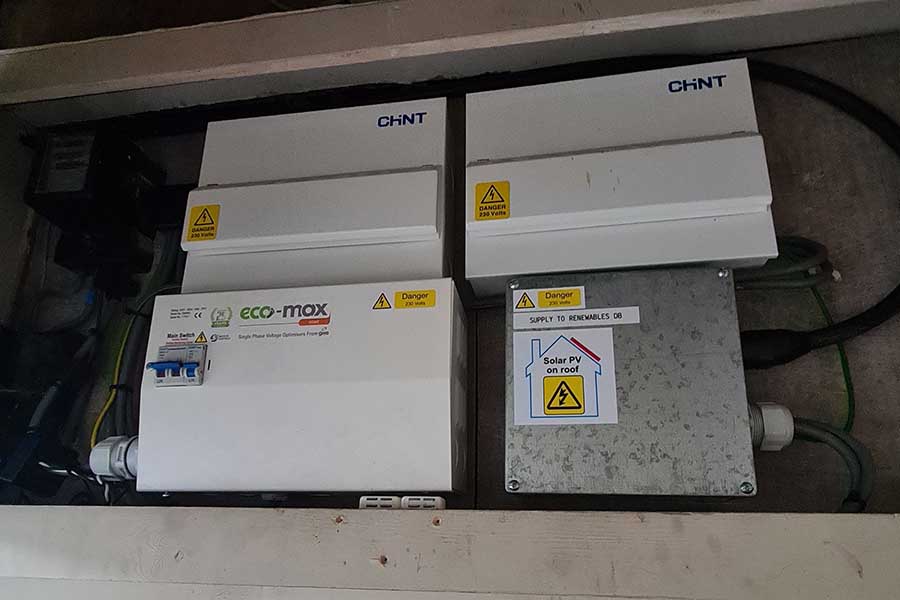
A voltage optimiser is a transformer-based device installed at the electrical switchboard, where the mains supply enters a building. Its purpose is to reduce incoming voltage to a lower, steadier level, typically around 220 to 224V. The principle is that some appliances consume more electricity than they need when supplied at higher voltages, and the optimiser removes that excess.
UK Grid Voltage Obligations Under ESQCR 2002
The UK mains voltage nominal is 230V, but the Electricity Safety, Quality and Continuity Regulations 2002 permit Distribution Network Operators (DNOs) to supply within a range of +10% and -6% of that nominal. In plain terms, that means delivered voltage can legally reach 253V at the meter.
Many UK properties, particularly older ones or those located near the beginning of a distribution cable, regularly receive supply voltage well above 230V. The voltage optimiser’s job is to bring that down to a target level regardless of what the DNO delivers.
Fixed-Ratio vs Dynamic Voltage Optimisers
Fixed-ratio and dynamic voltage optimisers solve the same problem in different ways, and the right choice depends entirely on how stable your incoming supply actually is.
| Feature | Fixed-Ratio | Dynamic |
| How it works | Applies a constant step-down, regardless of incoming supply level | Actively regulates output in response to fluctuating input |
| Output stability | Fixed, doesn’t adjust | Steadier throughout the day |
| Cost | Lower | Higher |
| Complexity | Simpler | More complex |
| Best suited to | Sites with stable incoming voltage | Sites where incoming voltage varies significantly |
| Risk if mismatched | A fixed step-down on an already-low supply can push voltage below the optimal range | Not typically a risk in this direction |
Neither type can be recommended without first knowing what the incoming supply actually measures at your property.
Which Appliances and Load Types Actually Benefit?
Voltage optimisers deliver measurable energy savings on resistive loads such as older electric storage heaters and traditional motor-driven appliances, but have little or no effect on modern constant-power devices including LED lighting, laptops, and inverter-driven white goods.
The core principle is straightforward. In resistive loads, power drawn is proportional to the square of the voltage, so reducing the voltage reduces electricity consumption in proportion. In constant-power loads, switch-mode power supplies and inverter drives regulate their own draw to maintain output regardless of supply voltage. The device connected to the mains continues consuming the same wattage whether voltage is 250V or 220V.
Likely to benefit:
- Older-style electric storage heaters
- Traditional incandescent or halogen lighting elements
- Older induction motors in appliances such as washing machines and fridges without inverter drives
- Certain immersion heater configurations
Unlikely to see a meaningful benefit:
- LED lighting with switch-mode drivers
- Laptops and desktop computers
- Modern televisions
- Inverter-driven washing machines and dishwashers
- Modern refrigerators
- EV chargers
The appliance mix in a typical modern UK home has shifted heavily toward constant-power devices. This is the primary reason voltage optimisers underperform expectations in many residential installations. A home that has already moved to LED lighting throughout and upgraded to modern white goods has, in effect, already reduced the proportion of its electricity consumption that a voltage optimiser could influence. Understanding your home’s energy costs is a useful starting point before evaluating any efficiency product.
What Does Independent Evidence Say About the Savings Claims?
Vendor marketing for voltage optimisers typically claims energy savings of 8–15%. Independent assessments tell a more conditional story: savings vary significantly by site and load profile. Sites with predominantly modern, non-linear loads saw substantially lower returns than vendor projections suggested. Sites receiving supply voltage already close to the target output level saw negligible electricity consumption reduction.
The DECC voltage optimisation field trial work similarly found that real-world outcomes across a range of site types were highly dependent on the specific conditions at each property. No generalised savings percentage applies reliably across the UK domestic stock. The technology delivers on its promise in narrow conditions. Outside those conditions, savings are modest at best.
Carbon footprint reduction claims linked to voltage optimisers are subject to the same dependency. A carbon reduction only occurs if electricity consumption actually falls. For homes dominated by constant-power devices, neither the bill nor the carbon footprint changes in any meaningful way.
How to Assess Whether a Voltage Optimiser Is Right for Your Property
No credible savings projection for a voltage optimiser can be made without first measuring what is actually arriving at your meter.
The Power Quality Survey: What It Involves and Why It Matters
A power quality survey involves a specialist installing a monitoring device on your incoming supply to record voltage levels over several days, covering both peak and off-peak periods. The results show whether your property consistently receives overvoltage, by how much, and how variable that supply is across the day.
- A property whose measured supply sits consistently around 220–224V will see negligible benefit from a voltage optimiser, because the incoming voltage is already at or near the target output level
- A property regularly receiving 240–250V has a documented overvoltage problem the device is designed to address
A supplier who provides a savings estimate without this step cannot be relying on your property’s specific incoming voltage data.
Auditing Your Load Profile Before You Commit
Alongside the voltage measurement, an honest audit of your appliance mix tells you what proportion of your electricity consumption a voltage optimiser could theoretically influence. If the majority of your home’s electricity use comes from modern LED lighting, laptop and device charging, modern inverter-driven white goods, and EV charging, the case for a voltage optimiser becomes thin regardless of incoming voltage levels.
The two assessments together, actual supply voltage and actual load profile, are what any credible recommendation must be built on. Approaching it as a self-diagnostic rather than waiting for a supplier to frame it for you puts the relevant information in your hands before any sales conversation begins.
Payback Period and Return on Investment: The Honest Numbers
Residential voltage optimiser units typically cost £200–£600 including installation. Vendor payback period claims usually suggest two to four years, based on projected energy savings of 8–15%. That range may be defensible for a property that genuinely presents overvoltage and a predominantly resistive load profile. For a modern home with efficient appliances and a supply voltage already close to the target output level, the device may not recover its cost within its operating lifetime.
Return on investment depends on four variables:
- Incoming supply voltage
- The appliance profile of the home
- Total electricity consumption volume
- Current unit prices
A high-consumption property with legacy resistive loads and documented overvoltage is a materially different proposition from a low-consumption, modern-appliance household. Smart meter compatibility is worth noting here: because smart meters measure actual consumption, any genuine energy savings from voltage optimisation will show up in your real-time data post-installation, giving you a straightforward way to validate whether the device is delivering.
Stay Connected with Upvolt
Get the latest updates on energy innovations, smart solutions, and exclusive offers.
Voltage Optimisers and Solar Panels: Do They Work Together?
A voltage optimiser installed on the incoming supply side affects only the electricity imported from the grid, not solar power generated and consumed directly on-site. For a property with a solar installation, a proportion of electricity consumption is already met by self-generated power, which reduces the base on which the optimiser can operate. This does not make the two technologies incompatible, but it does reduce the marginal value of adding a voltage optimiser to a home that already has solar.
For homeowners exploring the broader picture of how solar panels can reduce your electricity bills, or considering battery storage and how it maximises on-site energy use, the mechanism is different from voltage reduction:
- Solar and battery storage reduce what you buy from the grid by generating and storing your own power
- Intelligent energy management, through a system like the Skygate® home energy management system, goes further by directing surplus generation to wherever it delivers the most value, across heating, storage, and vehicle charging
These approaches deliver energy savings at a scale that generally compares more favourably than voltage optimisation alone for a modern UK home.
How Upvolt Approaches Energy Efficiency for UK Homes
The right energy efficiency approach starts with understanding how a property actually uses electricity, not with selecting a product and working backwards. That is the starting point for any energy assessment Upvolt carries out.
Whole-Home Energy Assessment
What we consider when advising a homeowner covers consumption patterns, tariff type, roof suitability, existing technology, and where the largest opportunities for bill reduction sit. For some properties, the most significant opportunity is generating their own electricity through solar. For others, it is shifting when consumption happens through time-of-use tariffs and smart management.
The starting point is always the specific property, not a product category. If you are thinking about reducing electricity bills without solar, understanding which measures are suited to your home’s characteristics is the question an assessment answers.
Integrated Renewable Energy Solutions
Upvolt installs solar panels, battery storage, heat pumps, and EV chargers, and integrates them through the Skygate® home energy management system. In plain terms, Skygate® knows when energy is cheapest to import from the grid, when the home is generating surplus solar power, and how to direct that surplus most efficiently across storage, heating, and vehicle charging.
This level of integration delivers verified, measurable energy savings across a home’s full consumption profile, at a scale that voltage optimisation alone cannot match for most modern UK homes.
Let’s Recap
Voltage optimisers are a legitimate technology addressing a real problem. UK grid voltage can legally and routinely exceed the nominal 230V level, and for properties with high incoming voltage and predominantly resistive loads, the device does what it claims. It’s not a scam, but its effectiveness is narrower than vendor marketing suggests.
The critical variables are incoming supply voltage and load profile. Homes dominated by LED lighting, inverter-driven white goods, and switch-mode electronics are unlikely to see meaningful savings, since those appliances draw constant power regardless of voltage. A power quality survey and an honest audit of appliance types are the two prerequisites for any credible projection.
For most modern UK homes, the savings available through voltage optimisation are modest next to what solar generation, battery storage, and intelligent energy management can deliver. That doesn’t make voltage optimisers worthless, it means they should be judged on site-specific data rather than vendor projections, and the bar for a genuine return is higher than the marketing implies.
If a supplier quotes without a power quality survey, their savings estimate can’t be based on your property’s actual data. Requiring that evidence first is reasonable due diligence, not an unreasonable ask.
About Upvolt
Upvolt is a renewable energy installer serving homeowners and businesses across southern England, specialising in solar panels, battery storage, heat pumps, EV chargers, and the Skygate® home energy management system. The advisory approach starts with an honest assessment of what a property actually needs. This article covers a product Upvolt does not sell, because giving a homeowner an accurate picture of their options is more useful than directing every question toward a particular technology.
When a homeowner is ready to explore solar, battery storage, or smarter energy management, Upvolt’s process begins with understanding their current consumption patterns, tariff, and roof characteristics before any system is recommended. Upvolt’s MCS-certified operating companies install systems that deliver verified, measurable energy savings, and the Skygate® platform integrates generation, storage, and consumption shifting into a single managed system.
Solar, battery storage, and smarter energy management deliver savings on a different scale to voltage optimisation, but which one is right for your home still depends on your roof, your usage, and your current setup. Upvolt can work through that with you, with a get a free, no-obligation quote, before you spend anything.
FAQ
How Much Money Can a Voltage Optimiser Realistically Save on Electricity Bills?
The honest answer depends entirely on two factors: how high your incoming supply voltage actually is, and what appliances your home primarily runs. Properties receiving voltage consistently around 240 to 250V with older resistive loads may see meaningful savings; modern homes dominated by LED lighting, inverter-driven appliances, and switch-mode powered devices are likely to see very little. Vendor claims of 8 to 15% are possible in specific circumstances but are not typical across the range of UK domestic properties. A power quality survey is the only way to project your specific savings potential credibly.
Are Voltage Optimisers Worth It for Home Use in the UK?
For some properties, yes, but the conditions that make them worthwhile are narrower than the marketing suggests. A home with documented overvoltage, a significant proportion of older resistive or motor-driven appliances, and a high electricity consumption base has the strongest case. A modern home with energy-efficient appliances, LED lighting throughout, and already-modest bills is unlikely to recover the installation cost within a reasonable timeframe. The decision should be based on site-specific assessment rather than generic savings projections.
What Is the Difference Between a Voltage Optimiser and a Voltage Stabiliser?
A voltage optimiser is designed to reduce incoming mains voltage to a target level, typically around 220 to 224V, with the goal of reducing energy consumption in voltage-sensitive loads. A voltage stabiliser is designed to maintain consistent output voltage regardless of supply fluctuations, primarily to protect sensitive equipment rather than to reduce consumption. Some dynamic voltage optimisers combine both functions, regulating output within a narrow range while also stepping down the overall level.
Do Voltage Optimisers Work With Solar Panels?
A voltage optimiser fitted on the incoming grid supply side affects only the electricity imported from the grid, not the solar power generated and consumed directly on-site. For a home with solar panels, a proportion of electricity is already self-generated, which reduces the base on which the optimiser can deliver savings. Compatibility between the two technologies is not a technical problem, but the financial case for adding a voltage optimiser to a home that already has solar is weaker than for a home relying entirely on grid electricity.
How Long Does a Voltage Optimiser Take to Pay for Itself?
Payback periods claimed by vendors typically range from two to four years, based on savings projections of 8 to 15%. In practice, payback depends on incoming voltage levels, appliance profile, electricity consumption volume, and current unit prices. For homes where the conditions are not well-suited to voltage optimisation, the device may not pay back within its operating lifetime. Requiring a power quality survey and a site-specific savings projection from any supplier before purchasing is a straightforward way to test whether the vendor’s payback estimate reflects your property’s actual data.

Alex Lomax
CEO & Co-Founder
Share article


Share article