-
Now live! Generate even more savings with our Skygate system. Click here to learn more.

Heat Pumps
9 mins read
Year-Round Comfort: How Heat Pumps Provide Both Heating and Cooling
16 Nov 2025How heat pumps deliver efficient heating and cooling for comfort and lower energy costs throughout the year.
Take the first step toward energy independence today.
get a quote
The UK's transition to low-carbon heating is gaining pace as households seek efficient, affordable ways to stay comfortable in every season. Rising energy prices and climate goals are driving interest in systems that cut costs and emissions without reducing performance.
Heat pumps deliver exactly that. They provide heating in winter and cooling in summer from a single system. Rather than generating heat, they transfer it, achieving up to three times more energy output than the electricity they use. This efficiency makes them one of the most practical and sustainable options for modern homes.
This article explains how heat pumps work, why they suit the UK climate, and how Upvolt's Skygate™ platform helps households maintain consistent comfort and lower energy bills throughout the year.

9 min read
On this page
Why a Heat Pump with Upvolt Makes Sense
- Lower energy bills all year with efficient heating and cooling in one system.
- Smarter savings when combined with solar panels, battery storage, and intelligent Skygate® control.
- Financial support available, with Boiler Upgrade Scheme grants of up to £7,500.
- One trusted provider for solar, storage, heat pumps, and EV chargers, designed and installed by Upvolt’s certified team.
How Heat Pumps Work
A heat pump moves heat rather than producing it. In winter, it extracts thermal energy from the air or ground outside and transfers it indoors. In summer, the process reverses, removing heat from your home to keep it cool.
Because it runs on electricity instead of fuel, a heat pump avoids combustion losses. For every kilowatt of electricity consumed, it can provide up to three kilowatts of heating or cooling output, depending on the system and conditions.
This level of efficiency directly reduces energy bills and emissions, especially when powered by renewable electricity from solar panels.
Types of Heat Pumps
Heat pumps fall into three main types. All use the same basic cycle but differ in where they draw heat from and how that energy is transferred.
Air Source Heat Pumps (ASHP)
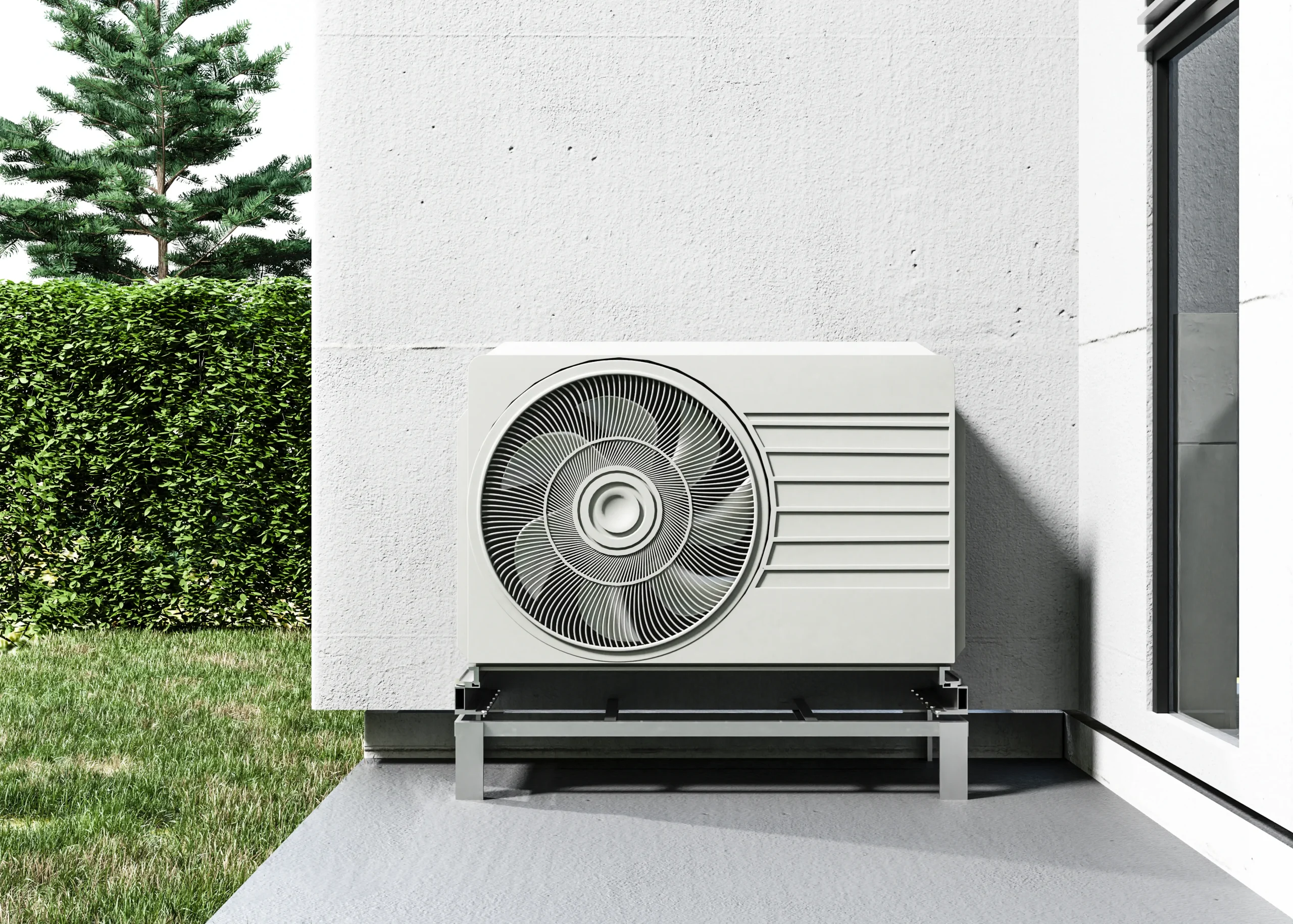
Air source systems absorb heat directly from the outside air. Even when temperatures drop below freezing, there is enough energy in the air for the system to operate efficiently. They are compact, require only an external fan unit, and connect easily to existing radiators or underfloor heating. Air source heat pumps are typically the most affordable and fastest to install, making them the preferred option for most UK homes.
Ground Source Heat Pumps (GSHP)
Ground source systems collect heat stored below the surface using pipe loops buried in the soil. The ground maintains a steady temperature throughout the year, usually between 8°C and 12°C, which allows the system to deliver very stable efficiency in all seasons.
Installation can involve either horizontal loops, which require garden space, or vertical boreholes, which suit smaller plots. These systems have a higher upfront cost but deliver excellent long-term performance and low running costs.
Water Source Heat Pumps (WSHP)
Water source systems capture heat from natural bodies of water such as lakes, rivers, or ponds. The high thermal capacity of water allows for efficient energy extraction and consistent performance, especially in larger properties near suitable water sources.
Although less common for residential homes, these systems can be among the most efficient where site conditions allow.
Heat Pump Types Comparison
Here’s a table comparing the main types of heat pumps to help you choose the right system for your home.
| Type | How It Works | Ideal For | Key Advantages | Considerations |
| Air Source Heat Pump (ASHP) | Absorbs heat directly from the outside air and transfers it indoors through a fan unit. | Most UK homes; properties without large outdoor space. | Lower upfront cost; quick installation; works efficiently even below freezing. | Slightly lower efficiency in very cold conditions; requires external fan unit. |
| Ground Source Heat Pump (GSHP) | Extracts heat from the ground using buried pipe loops that circulate a heat-transfer fluid. | Homes with available garden space or land; new builds. | Very stable efficiency year-round; low running costs; quiet operation. | Higher installation cost; requires digging or drilling for pipework. |
| Water Source Heat Pump (WSHP) | Draws heat from a nearby lake, river, or pond using submerged pipe loops. | Properties near suitable water sources; larger estates. | Excellent efficiency; consistent performance across seasons. | Limited to locations with access to suitable water; additional permissions may be required. |
Why Heat Pumps Are Built for the UK Climate
Modern heat pumps are designed to perform efficiently across the UK’s varied and often unpredictable weather. Even during cold winters, they continue to extract usable heat from the air, ground, or water. Advanced refrigerants, variable-speed compressors, and smart control systems allow them to operate reliably at outdoor temperatures as low as –15°C.
Today’s systems are also quieter, more compact, and compatible with existing heating infrastructure, making heat pump installation straightforward for most homes. Many properties can connect a new heat pump directly to upgraded radiators or underfloor heating without major renovation.
When combined with proper insulation and high-efficiency emitters, a heat pump provides steady, even warmth without the sharp temperature swings or frequent on–off cycling common with gas boilers. In warmer months, the same system can reverse its operation to deliver gentle cooling, keeping the home comfortable through the changing seasons.
With professional heat pump design and commissioning from Upvolt’s certified team, every installation is optimised for the local climate and your property’s specific needs. The result is reliable year-round comfort and high energy performance, no matter the weather.
Stay Connected with Upvolt
Get the latest updates on energy innovations, smart solutions, and exclusive offers.
Real Savings and Long-Term Value with Heat Pumps
Heat pumps combine efficiency, long-term savings, and lower emissions, making them one of the most cost-effective ways to heat and cool a modern home. With the right setup, households can significantly reduce running costs and their carbon footprint while accessing generous government support.
Lower Operating Costs
Although installation costs are higher than a traditional boiler, running costs are lower. On average, a gas boiler costs about £2,000 per year to operate, while a heat pump costs roughly £1,900, creating an immediate saving of around £100 annually before factoring in other efficiencies.
Heat pumps convert one unit of electricity into two to three units of heat, depending on the system and conditions. This high efficiency means many homes can reduce annual heating bills by 30% compared with gas or electric systems.
For properties with solar panels, the savings grow further. Using self-generated electricity to power a heat pump reduces grid reliance by up to 75% and shields households from rising energy prices. In some cases, energy costs fall by over £800 per year, especially in well-insulated homes.
Heat pumps also require less maintenance than combustion-based systems, lowering ongoing servicing expenses.
Payback and Long-Term Value
The payback period for a heat pump typically falls between 5 and 15 years, depending on energy use, electricity tariffs, and the system installed. Homes with solar power often recover their investment sooner, as they generate much of the electricity needed to operate the heat pump.
Government incentives such as the Boiler Upgrade Scheme (BUS), which provides grants of up to £7,500, further improve the financial return. Once the system has paid for itself, homeowners continue to benefit from reduced energy bills for many years.
Environmental Impact
Heat pumps play an important role in cutting household carbon emissions. For example, a three-bedroom home could save 1,404kg of COâ‚‚ a year by switching from a gas boiler to a heat pump.
When powered by renewable electricity, either from solar panels or green energy tariffs, a heat pump operates with near-zero carbon output. This makes it a key technology for helping the UK meet its net-zero targets while improving home comfort and energy independence.
Take Control of Your Heating and Energy Costs with Upvolt’s Skygate®
Upvolt’s Skygate® platform connects the heat pump with other smart home energy systems, including solar panels, batteries, and EV chargers.
It analyses weather forecasts, indoor conditions, and energy prices to maintain comfort at the lowest cost. Skygate® can:
- Adjust settings automatically based on temperature and usage trends
- Optimise operation during off-peak periods
- Coordinate solar generation, battery storage, and heating for maximum efficiency
- Provide live monitoring and cost insights through a single interface
With Skygate®, your heating and cooling become part of a fully intelligent home energy system that responds to your needs in real time.
Final Thoughts: The Smarter Way to Heat and Cool Your Home
A modern heat pump delivers more than warmth in winter and cooling in summer. It gives homeowners control over comfort, costs, and carbon emissions through one efficient, future-ready system.
When combined with Upvolt’s Skygate® platform, it becomes part of a connected home energy ecosystem that automatically balances solar, storage, and heating for maximum savings and performance.
Heat pumps represent a practical step toward a more sustainable home and a smarter approach to everyday energy use. With expert design and installation from Upvolt, you gain consistent comfort, lower running costs, and long-term value backed by proven technology and professional support.
Power Your Home with Upvolt
Upvolt delivers complete renewable energy solutions, helping homeowners reduce costs, cut emissions, and gain energy independence. Our services include solar panels, battery storage, heat pumps, and EV chargers, all designed to work together as one intelligent system.
Our certified team manages the entire process from survey and design to installation, commissioning, and Skygate® integration. Every project meets MCS standards for quality and safety, ensuring long-term performance and eligibility for government incentives such as the Boiler Upgrade Scheme, which provides up to £7,500 toward heat pump installations.
Each Upvolt system is tailored to your property, combining advanced technology and premium components to deliver lower energy bills, consistent comfort, and greater energy independence.
Complete our short online survey to receive a free, no-obligation quote and discover how we can help you save money, increase efficiency, and power your home sustainably.
FAQ
How efficient are heat pumps compared with gas boilers?
Heat pumps can be two to three times more efficient than gas boilers because they transfer existing heat rather than generate it through combustion. For every unit of electricity used, a heat pump can produce up to three units of heat, helping reduce energy bills and carbon emissions.
Can a heat pump work effectively during cold UK winters?
Yes. Modern air-source and ground-source heat pumps are designed for the UK climate and can operate efficiently at outdoor temperatures as low as –15°C. Systems are optimised to maintain consistent comfort throughout the year.
What type of property is suitable for a heat pump?
Most homes can accommodate a heat pump, including older properties with suitable insulation and heating systems. Upvolt’s engineers assess each property to design a system that matches its size, heat demand, and available space.
What government funding is available for heat pumps?
The Boiler Upgrade Scheme (BUS) offers grants of up to £7,500 toward the cost of an air-source or ground-source heat pump installation. Upvolt’s team helps homeowners check eligibility and manage the application process.
Can I combine a heat pump with solar panels and battery storage?
Yes. Heat pumps work perfectly alongside solar panels and battery storage. When managed through Upvolt’s Skygate® platform, the system automatically uses low-cost or self-generated electricity, reducing running costs and grid reliance even further.

Alex Lomax
CEO & Co-Founder
Share article


Share article